

An executive protection driver, in the hospitality sense, is a professionally trained chauffeur who provides luxury transportation with an added layer of security awareness and discretion. Weddings, proms, corporate transfers, airport pickups, and VIP escorts are the main uses. The value comes down to duty-of-care: proper insurance, vetted drivers, and written confirmations, not just a nice car.
TL;DR:
- Verify the operator provides a certificate of insurance and confirms driver licensing, background checks, and documented training before booking.
- Confirm the vehicle make, model, and driver details are in writing, and request contact information the morning of the event to avoid last-minute surprises.
- Understand pricing includes potential extra charges for tolls, gratuity, overtime, and vehicle substitution; watch out for hidden fees and unclear quotes.
- Check the driver arrives 10 to 15 minutes early, with a clean vehicle, working amenities, and appropriate professional appearance before the pickup.
- Ensure the driver follows safety protocols, communicates with dispatch in emergencies, and coordinates seamlessly with security personnel when applicable.
Table of Contents
- What Services and Vehicles Fit Your Event
- How Do You Vet a Reputable Executive Protection Driver?
- When Should You Book and What Should the Price Include?
- What Should You Check When the Driver Arrives?
- Training and Qualifications Behind the Wheel
- Safety Protocols During Transport
- How Drivers Coordinate With Security Personnel
- What Happens if There's an Emergency on the Road
- Legal and Regulatory Rules That Apply to This Work
- What I've Learned Running This Kind of Service
- Ready to Book Your Executive Protection Driver in Austin?
- Sources
What Services and Vehicles Fit Your Event
A hospitality-focused executive protection driver isn't the same thing as a tactical bodyguard. That distinction matters for anyone booking transportation, because the two roles solve different problems. A close-protection agent focuses on physical security for at-risk individuals. What you're booking for a wedding, a prom night, or a corporate transfer is a chauffeur trained in defensive driving, situational awareness, and discreet service, someone who keeps the ride smooth, on time, and free of the kind of chaos that ruins an event.
Standard service typically includes meet-and-greet at arrivals, flight monitoring for airport runs, luggage handling, and a chauffeur who's dressed and positioned for a professional first impression before you even step outside. The vehicle itself should be staged and ready, not scrambling to find a parking spot when your flight lands.
Matching the vehicle to the mission makes or breaks the experience. Executive sedans work best for solo business travelers or a quick corporate transfer between meetings. SUVs handle families with luggage or a small VIP party. Sprinter vans or minibuses fit bridal parties, prom groups, or a corporate team moving together. Stretch limos still own the ceremonial role, the grand arrival at a wedding or gala, which photos are built around.
Planners often add extras beyond the base package:
- Red carpet service for arrivals and step-outs
- Champagne or non-alcoholic beverage service on board
- Decorated vehicles for weddings or proms
- Multi-stop itineraries for wine tours or bachelorette weekends
- Extended standby time for photo sessions or receptions
How Do You Vet a Reputable Executive Protection Driver?
Vetting takes ten minutes on the phone and saves you from a ruined event day. Start with the paperwork, not the pitch.
- Ask for a certificate of insurance. Commercial liability coverage is the line separating a legitimate operator from a guy with a nice car and a Craigslist ad. Duty-of-care is exactly why corporate travel managers and hotels insist on a documented insurance and vetting trail before they'll book a provider.
- Confirm driver vetting standards. Background checks, a valid commercial driver's license, uniform or ID presentation, and documented training should be standard, not a special request.
- Get written confirmation before you pay a deposit. That document should list the vehicle make and model, the driver's name and direct contact number, exact pickup coordinates, cancellation terms, overtime rates, and the total landed cost. A detailed pre-booking checklist is standard practice among established operators.
- Ask direct questions and expect direct answers. Verifying licensing, requesting a certificate of insurance, and confirming the exact vehicle and driver assigned to you are reasonable questions any provider should answer without hesitation.
Watch for red flags: evasive answers about insurance, no written quote, refusal to name the driver in advance, or pricing that's suspiciously low with vague terms attached. A quote that seems too good usually hides fees you'll discover the day of your event.
Pro Tip: Ask the provider to email you the driver's name and cell number the morning of your event, not just at booking. Providers who balk at this are usually the ones who can't confirm staffing.
When Should You Book and What Should the Price Include?
Timing depends on the event. Airport transfers with flight monitoring can often be booked 24 to 72 hours out since the logistics are simpler. Weddings and proms need 60 to 90 days of lead time, especially around graduation season or peak wedding months when fleets book solid. Corporate accounts with recurring transfer needs should set up a standing arrangement rather than booking one ride at a time.
Pricing shows up in three shapes: hourly rates with a minimum booking window (common for weddings and tours), fixed-rate point-to-point transfers (typical for airport runs), and flat event packages that bundle multiple vehicles or extended hours.
Whatever the model, confirm what's excluded before you sign anything:
- Tolls and airport fees, which vary by route
- Gratuity, whether it's included or added separately
- Overtime charges if your event runs long
- Vehicle substitution policy if your assigned car breaks down
Hidden fees are one of the most common complaints in this industry, and almost all of them trace back to a quote that never specified these items. Also confirm flight tracking procedures for airport transfers, exact pickup and drop-off coordinates, and whether a backup vehicle exists if your primary car has a mechanical issue.
What Should You Check When the Driver Arrives?
Your chauffeur should be positioned and ready 10 to 15 minutes before pickup, not pulling in as the clock hits zero. Confirm the driver's name matches what you were told, check the vehicle description and plate against your written confirmation, and take a quick look at how they're dressed and how they present themselves.
Inside the vehicle, a short check tells you a lot:
- Interior cleanliness and no lingering odors
- Working AC, lighting, and any promised amenities (water, charging cables, aux/Bluetooth)
- Enough trunk or cargo space for the luggage or group you mentioned at booking
- Paperwork or a booking reference the driver can produce on request
A simple arrival checklist covering punctuality, appearance, and vehicle condition is one of the fastest ways to catch problems before they become bigger ones.
Driver conduct matters just as much as the car. A good chauffeur reads the room, offers help with doors and bags without hovering, and stays quiet unless you want conversation. If you want a silent cabin, say so at pickup, most trained drivers will take the cue immediately and drop it.
If something goes wrong, whether the car's late, the vehicle doesn't match the confirmation, or the driver seems unprepared, call the dispatch number listed on your booking immediately and document the issue with a photo and timestamp. A provider with a real operations team should offer a remedy on the spot, not a promise to "look into it" after the event's already over.
Training and Qualifications Behind the Wheel
The training gap between a rideshare driver and a professional chauffeur is significant, and it's exactly why the price point differs. Defensive driving instruction teaches evasive maneuvers, following-distance discipline, and hazard anticipation, skills that matter far more in an unfamiliar city or heavy event traffic than most passengers realize.
Security awareness training covers route familiarity, situational scanning at pickup and drop-off points, and recognizing when a location or crowd requires extra caution, like a packed hotel loading zone during prom season or a corporate campus with restricted access.
Commercial licensing is the baseline, but reputable operators layer on background checks, drug screening, and ongoing evaluation. Many chauffeurs also train specifically in luggage handling technique, protocol for VIP or diplomatic-style courtesy, and de-escalation, since event transportation occasionally means managing an anxious bride, a jet-lagged executive, or a rowdy prom group without letting the mood spill into the driving.
None of this requires the driver to carry a firearm or act as a bodyguard. It requires a level of preparation that separates a professional from someone who simply owns a nice vehicle and a smartphone app.
Safety Protocols During Transport
Route planning happens before the car ever leaves the lot. Professional operators map primary and backup routes, checking for construction, event traffic, or road closures tied to the specific venue or airport terminal involved.
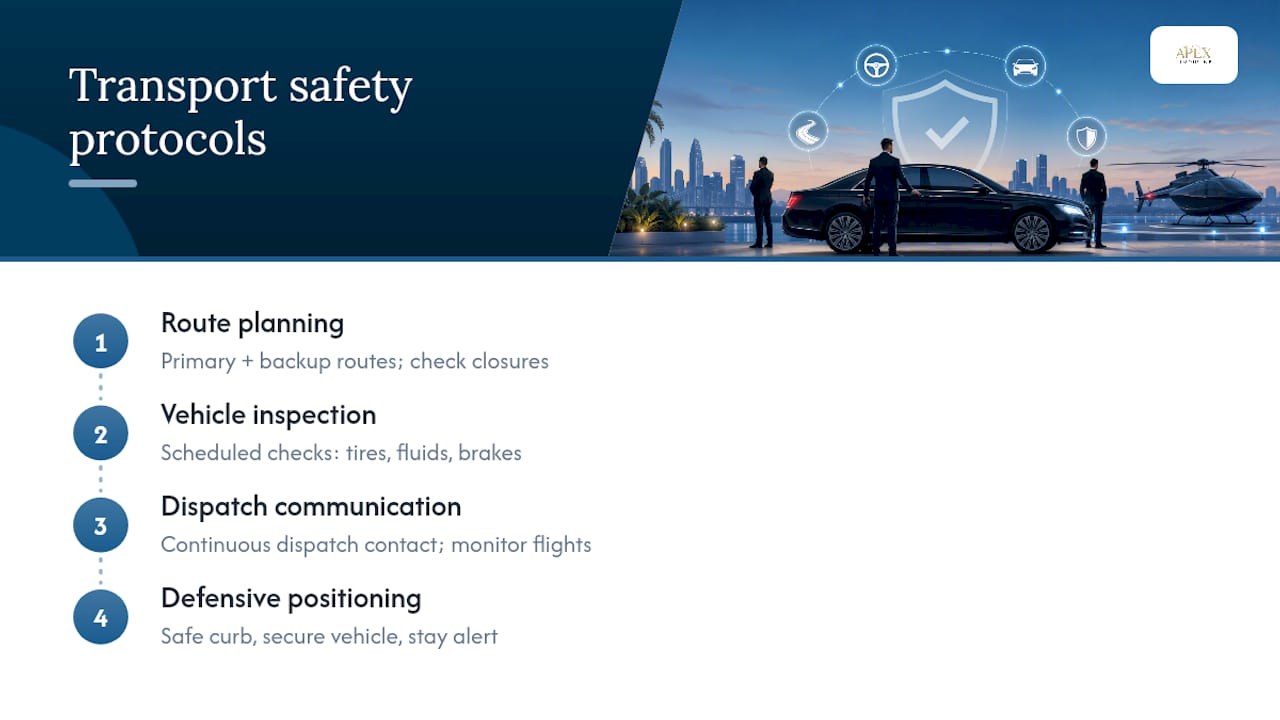
Vehicle inspection is routine, not occasional. Tire condition, fluid levels, brake function, and interior safety features get checked on a schedule, and any vehicle showing a mechanical flag gets pulled from service rather than sent out with a passenger aboard.
Communication protocols run in the background the entire trip. Drivers stay in contact with dispatch, particularly for high-value events like weddings and corporate transfers, so there's always a second set of eyes tracking timing and location. For airport runs, that means active flight status monitoring, adjusting pickup timing automatically if a flight is delayed or arrives early.
Defensive positioning at pickup and drop-off, staying alert to surroundings, choosing a safe curb location, keeping the vehicle secured while waiting, is a habit trained drivers carry into every job regardless of whether the passenger is a bride, a CEO, or a prom date.
How Drivers Coordinate With Security Personnel
For events involving a corporate security detail or a hired protection team, the chauffeur's job shifts slightly: less about independent decision making, more about executing a coordinated plan. That starts with a pre-event briefing covering the exact route, timing windows, and any contingency stops.
Radio or phone contact with the security lead keeps everyone synced on schedule changes, especially when an executive's meeting runs long or a wedding ceremony pushes back the reception timeline. The driver defers to the security team's read on the situation. If they say hold the vehicle or change the pickup point, a properly trained chauffeur adjusts without argument or delay.
Advance coordination on entry points, parking restrictions, and building access also prevents the awkward scenario of a car circling a venue because nobody confirmed where the loading zone actually is. Good operators treat this coordination as part of the standard service, not an upcharge.
What Happens if There's an Emergency on the Road
Every professional driver should know the basics of incident response before an emergency ever happens, not figure it out in the moment. That includes a clear protocol for mechanical breakdowns: pull to a safe location, contact dispatch immediately, and have a backup vehicle dispatched without asking the client to scramble for alternate transportation.
Medical situations, whether a passenger feels unwell or an accident happens nearby, call for the driver to know basic first aid awareness and, more importantly, exactly who to call and what information to relay. Route deviations due to road closures, severe weather, or unexpected traffic incidents should trigger an immediate call to dispatch and, where relevant, the event planner or security lead, so nobody's left guessing why the car is ten minutes behind schedule.
Documentation matters here too. A professional operator logs incidents, however minor, so patterns get caught (a recurring mechanical issue, a driver who consistently under-communicates) before they become a bigger liability.
Legal and Regulatory Rules That Apply to This Work
Commercial transportation operates under state-level licensing requirements that govern vehicle permits, driver qualifications, and insurance minimums. These requirements vary by state, so a provider licensed to operate in one region isn't automatically compliant elsewhere, which matters if you're booking transport that crosses state lines for a destination wedding or multi-city corporate trip.
Insurance requirements for commercial passenger vehicles typically exceed what a personal auto policy covers, and that gap is exactly why a certificate of insurance matters so much during vetting. A driver operating without proper commercial coverage exposes both themselves and their passengers to serious financial risk if an incident occurs.
Drivers also need to understand hours-of-service considerations, particularly for longer event days involving early morning airport runs followed by evening ceremony transport, since fatigue is a real safety factor over a long shift. None of this requires a law degree to understand as a customer, but it's worth knowing that a reputable provider treats these regulations as baseline compliance, not a box to check only when asked.
What I've Learned Running This Kind of Service
The biggest misconception planners bring to this business is that luxury and safety are separate line items, one for comfort, one for peace of mind. They're the same thing. A vehicle that looks immaculate but comes with a driver who can't produce a certificate of insurance isn't a luxury service. It's a liability with good upholstery.
At APEX LIMO, we build every booking around a written confirmation script before a client pays anything: certificate of insurance on request, confirmed vehicle make and model with plate number, the assigned chauffeur's name and direct contact, explicit wait and overtime rules, and a stated backup vehicle policy in case the primary car has a mechanical issue. If a provider can't produce those five things in writing, that's the moment to walk away, regardless of how the fleet photos look online.
Flight monitoring and a documented escalation path for day-of issues aren't add-ons in our book. They're the difference between a chauffeur service and a rental car with a driver attached.
— Jason
Ready to Book Your Executive Protection Driver in Austin?
Luxury limousine services handle weddings, proms, corporate transfers, VIP escorts, and airport pickups with a standard of trained chauffeurs, insured vehicles, and a carefully maintained fleet. Packages are designed to fit specific events, offering options like stretch limousines for larger parties or discreet sedans for individual transfers.

Customizable packages focus on details such as vehicle selection suited to group size, chauffeurs trained for comfort and discretion, and written confirmation prior to deposit, exemplifying best practices for reservation standards.
If you're planning an event and want the paperwork sorted before the pressure of the actual day sets in, request a written quote through APEX LIMO and confirm your vehicle, driver, and pickup details in advance.
Sources
- Luxury Chauffeur Service Process: Book to Arrival Guide
- Ultimate Limo Booking Checklist: First Call to Drop-Off
- How to Choose the Best Limo Service in NYC: Questions to Ask Before You Book