
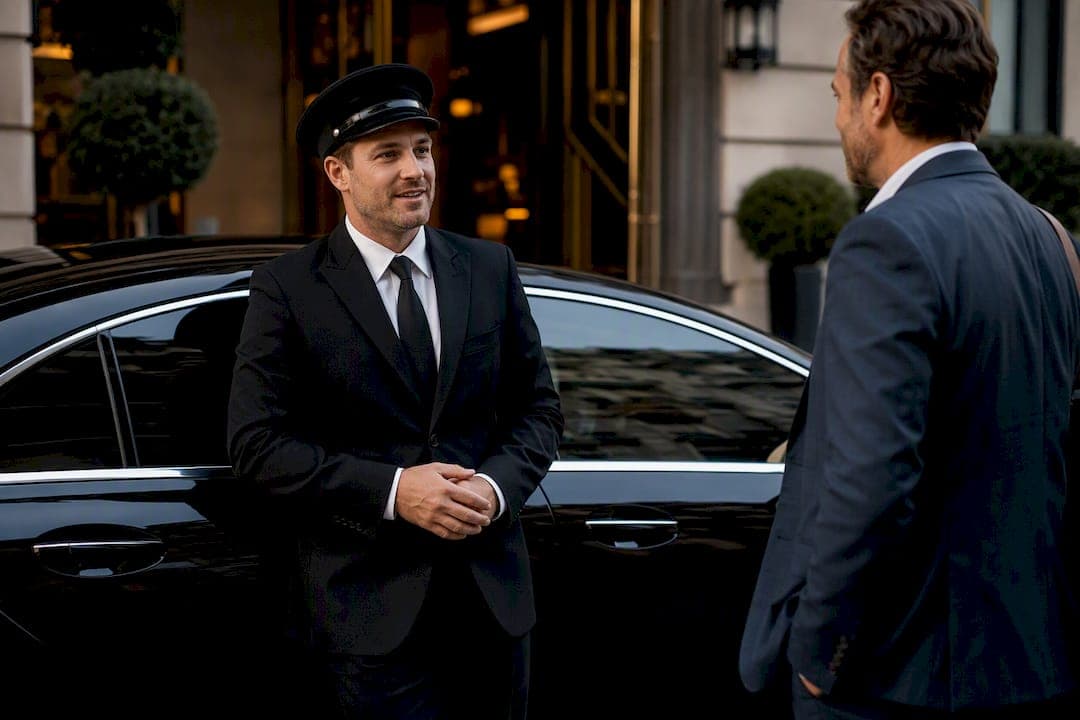
VIP transportation protocols are the documented rules and operational controls that govern how a high-profile client moves from point A to point B without exposure, delay, or risk. Three things are non-negotiable, and any provider who treats them as optional isn't running a VIP program, just a nicer version of a taxi service.
- Privacy: itinerary details, pickup identifiers, and travel patterns stay on a need-to-know basis, full stop.
- Security: every movement gets a basic risk read before wheels turn, not after something goes wrong.
- Reliability: the vehicle is staged, the driver is briefed, and the timeline holds even when the flight doesn't.
A VIP arrival is judged almost entirely on the first five minutes after a traveler steps off a plane or out of a venue. If there's confusion, waiting, or a driver holding a sign with a name on it, the protocol already failed. And if you're the planner who booked that ride, the liability for that failure lands on your desk, not the driver's.
Key Takeaways
VIP transportation protocols succeed when privacy, security, and reliability are treated as defaults on every trip, not upgrades reserved for the most visible clients.
| Point | Details |
|---|---|
| Define the trigger | Escalate to full protocol handling for public-profile principals, delegations, or flagged event guests. |
| Control exposure | Ban public name signage, limit itinerary access, and set clear photo and social-media restrictions for staff. |
| Build the workflow | Confirm flight or FBO details, stage vehicles with a buffer window, and monitor arrivals in real time. |
| Vet and brief drivers | Require recurring background checks and document every pre-trip briefing for compliance records. |
| Choose a proven provider | APEX LIMO applies vetted chauffeurs, confirmed contact chains, and contingency planning to every Austin booking. |
Table of Contents
- What Counts as a VIP Transportation Protocol Versus a Standard Transfer?
- Which Privacy and Exposure-Control Protocols Should You Require?
- How Do Arrival and Departure Workflows Actually Run?
- What Vetting and Briefing Standards Should Chauffeurs Meet?
- What Technology and Communication Protocols Matter Most?
- When Does Duty of Care Require Escalation?
- What Templates Should Every Planner Keep on Hand?
- What Legal and Regulatory Rules Apply to VIP Transportation?
- How Should Providers Coordinate With Police and Emergency Services?
- How Do You Prepare for Medical Emergencies With VIP Clients?
- How Do You Handle Cultural and Protocol Etiquette for Different VIP Profiles?
- Why Does Post-Trip Debriefing Matter?
- What Do Planners Get Wrong About VIP Transportation Protocols?
- Ready to Put These Protocols to Work in Austin?
- Sources
What Counts as a VIP Transportation Protocol Versus a Standard Transfer?
Not every nice car with a driver in a suit qualifies as VIP protocol movement. A standard luxury transfer gets someone from the airport to the hotel comfortably. A protocol-driven movement is built around exposure control and contingency planning from the first phone call, not just comfort.
The differentiator isn't the vehicle. It's whether someone assessed the route, briefed the driver on discretion requirements, and built a fallback plan before the trip started. A few scenarios almost always require full protocol handling:
- Corporate principals or executives with public visibility (CEOs, board members, political figures)
- Celebrities, athletes, or public figures attending high-visibility events
- Foreign delegations or diplomatic guests with formal protocol expectations
- Any guest flagged by event organizers as a security or media target
When a guest's profile includes prior threats, active litigation, or heavy media attention, that's the signal to bring in a dedicated travel-security professional rather than relying on the transportation provider alone. Executive travel security experts note that the real difference between standard and high-end service is proactive threat assessment, not reactive scrambling once something goes wrong.
Which Privacy and Exposure-Control Protocols Should You Require?
Privacy failures rarely look dramatic. They look like a driver who says a guest's name too loudly in a hotel lobby, or an itinerary forwarded to six people who didn't need it. Build these into every RFQ and contract:
- Limit itinerary access. Only the assigned chauffeur, dispatcher, and a single point of contact should see the full schedule, pickup location, and passenger name.
- Ban public name signage at terminals and venues unless the client specifically requests visible identification. Use coded reference numbers or generic company signage instead.
- Choose vehicles for discretion, not just size. A stretch limo pulling up outside a low-key business dinner draws attention, a black SUV won't.
- Set greeting boundaries. Chauffeurs should never initiate conversation about the guest's identity, itinerary, or personal details with venue staff or bystanders.
- Prohibit photos and social media. Every driver and support staffer should sign an agreement barring photos, location tags, or public mentions of any client.
Pro Tip: Ask any prospective provider to show you their written privacy policy for drivers, not just describe it verbally. If it doesn't exist on paper, it doesn't exist operationally.
How Do Arrival and Departure Workflows Actually Run?
The gap between a smooth pickup and a chaotic one usually comes down to timing decisions made hours in advance, not scrambling in the moment.
Before any trip, the operations team should confirm:
- Flight or FBO details, including tail number for private aviation
- A verified direct contact for the principal or their assistant
- Luggage volume and any special handling needs
- Whether a protective detail or additional vehicle is traveling alongside
Private aviation pickups require different staging than commercial terminal arrivals, since ramp access and passenger release protocols vary by FBO. Once the trip is confirmed, the workflow runs on timing discipline:
- Monitor the flight in real time and adjust staging windows as delays or early arrivals occur.
- Build in a buffer so the vehicle is positioned before the plane lands, not after.
- Use controlled hand-off procedures at the curb or gate, with the chauffeur making direct visual contact rather than relying on a name placard.
- Keep a backup vehicle and driver on standby for last-minute swaps, and maintain a clear contact chain so a delay doesn't turn into a communication breakdown.
Workflow reliability, more than the vehicle itself, is what tourists and executives alike remember about a VIP transfer. For Austin airport transfers specifically, staging near baggage claim versus curbside pickup makes a measurable difference in wait time.
What Vetting and Briefing Standards Should Chauffeurs Meet?
A chauffeur handling VIP movements isn't just a skilled driver. They're the last line of defense against exposure, delay, and awkward situations that damage a client's trust in the event organizer.
- Background checks should run on a recurring basis, not just at hire, and should include motor vehicle records, criminal history, and reference verification.
- Defensive driving certification matters, but so does training in discretion: how to handle press at a venue, how to work alongside a protective detail without stepping on their role.
- Every driver should receive a pre-trip brief covering pickup timing, the full contact chain, any known passenger sensitivities (dietary needs, mobility issues, preferred temperature), and what to do if the plan changes mid-route.
- Documentation matters. Keep signed briefing acknowledgments and background-check renewal dates on file, since that paper trail is exactly what protects the organizer if something goes wrong later.
White-glove transportation guidance consistently points to chauffeur preparation and communication protocols as the pieces that separate a five-star experience from a merely adequate one.
Pro Tip: Ask for the driver's name and a photo before the trip, and have your on-site contact confirm identity at the vehicle. It takes thirty seconds and eliminates one of the most common failure points in VIP handoffs.
What Technology and Communication Protocols Matter Most?
Flight tracking software and GPS aren't optional add-ons anymore. They're the backbone of how a dispatcher knows a plane landed early or a car is stuck in traffic before the client has to ask.
- Real-time flight tracking should feed directly into dispatch, with ETA validation happening continuously, not just once at booking.
- All communication with the client or their assistant should run through a verified, ideally encrypted channel, never an unverified number picked up mid-trip.
- GPS tracking data should have a defined retention window. Storing location logs indefinitely creates a privacy liability with no operational benefit.
- For high-risk or high-visibility assignments, a monitored operations center (sometimes called a GSOC) can track multiple vehicles simultaneously and escalate in real time if something deviates from plan.
Digital hygiene, including encrypted communications and controlled device usage, is now treated as a core part of movement protocol rather than an afterthought for high-profile assignments.
When Does Duty of Care Require Escalation?
Transportation safety isn't a separate line item from your organization's broader duty-of-care obligations. It's one of the most visible pieces of it, since a transportation failure reflects directly on the organizer, not just the driver.
A few signals should trigger escalation beyond routine booking:
- The guest has a public profile likely to draw media or protester attention
- Credible intelligence exists about a threat, grievance, or prior incident
- The event itself is large-scale, politically sensitive, or draws significant press
A simple escalation matrix helps planners respond proportionally. Low risk might mean a standard chauffeur briefing and route plan. Medium risk adds a dedicated security liaison and pre-trip venue check. High risk brings in a professional travel-security firm, current local intelligence, and possibly armored vehicles or protective personnel riding alongside.
Whatever tier you land on, document it. A written risk assessment, driver briefing record, and contingency plan are what demonstrate due diligence if anything is ever questioned after the fact.
What Templates Should Every Planner Keep on Hand?
Good protocols mean nothing if they live only in someone's head. Keep these three artifacts ready to paste into your event file for every VIP move.
- Pre-trip planner checklist: passenger name and sensitivities, flight/FBO details, contact chain, luggage count, vehicle type, protection detail status, and signage instructions.
- Driver briefing script: pickup time and location, passenger identification method, contact chain in order of priority, known sensitivities, and the specific contingency plan if the flight or schedule shifts.
- Contingency swap checklist: backup vehicle assignment, backup driver contact, revised route, and updated notification chain to the client's assistant or security lead.
Store booking-confirmation fields (vehicle assigned, driver name and phone, confirmed pickup window, special instructions) directly in your event CRM so nothing lives only in a text thread. Our executive airport transfer preparation guide breaks down a version of this checklist planners can adapt directly.
What Legal and Regulatory Rules Apply to VIP Transportation?
Chauffeur services operate under state-level licensing requirements that cover vehicle-for-hire permits, driver licensing classes, and insurance minimums, and those rules vary depending on where the trip starts and ends. A provider running interstate movements needs to track compliance across every state line crossed, not just the origin point.
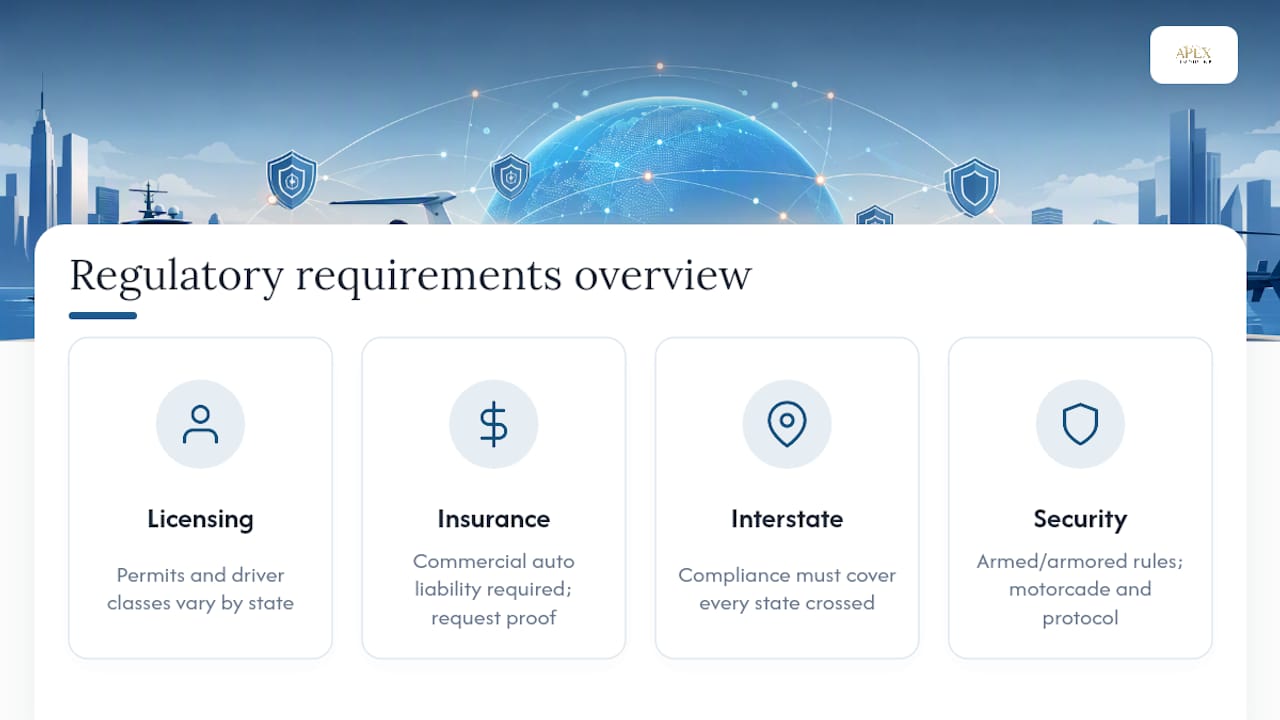
Insurance is the part planners overlook most often. A standard personal auto policy doesn't cover commercial passenger transport, and a provider carrying inadequate commercial liability coverage exposes both the driver and the organization that hired them if an accident occurs. Ask any provider for proof of commercial auto liability coverage before signing a contract, not after.
For security escort or protective driving assignments, additional layers apply. Some states require separate licensing for armed protective services, and armored vehicle use may trigger its own registration and inspection requirements. If a delegation or foreign dignitary is involved, diplomatic protocol may also dictate specific procedures around motorcade formation, right-of-way, and coordination with local authorities.
Data privacy regulations matter here too, particularly if the provider is storing passenger information, itineraries, or GPS logs digitally. A provider handling that data should have a clear retention policy and should never share passenger details with third parties without explicit consent. None of this needs to be complicated, but it does need to be verified in writing before you hand over a VIP client's schedule to a stranger with a car.
How Should Providers Coordinate With Police and Emergency Services?
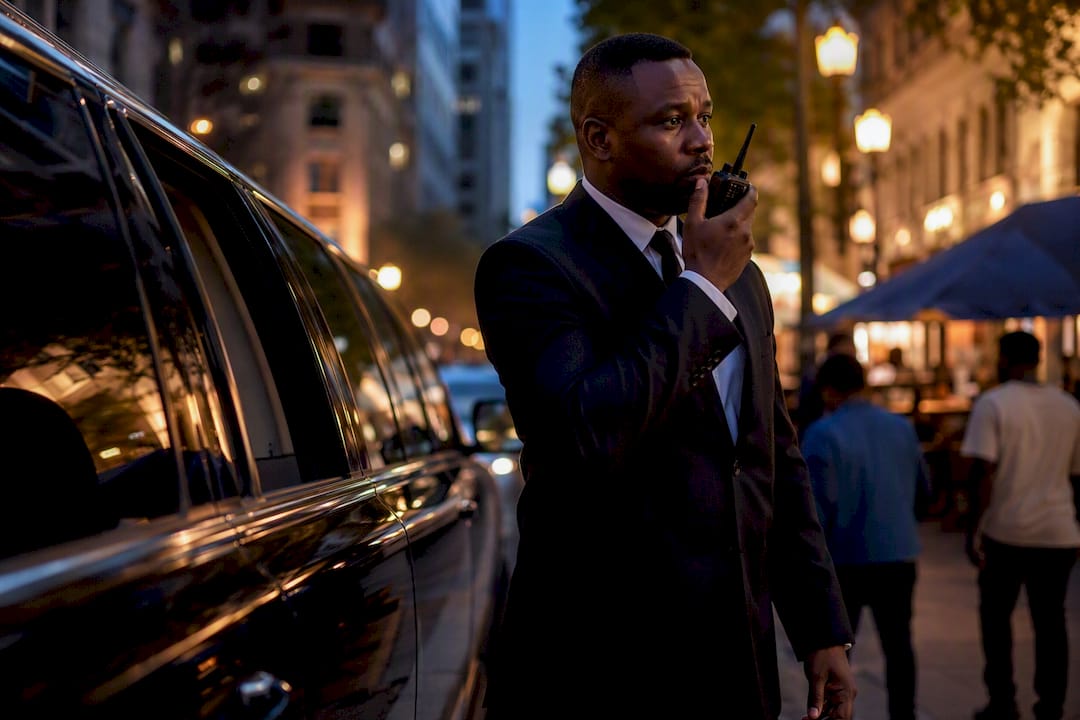
The relationship with local law enforcement should be established before an incident, not during one. For large events with multiple VIP movements, notifying local police of the event's timing, expected traffic patterns, and any motorcade plans helps avoid confusion if officers encounter the movement unexpectedly.
Every driver and dispatcher should know exactly what to do if a law enforcement officer initiates contact during a VIP movement: comply calmly, identify the passenger only if legally required, and avoid volunteering details about the client's schedule or purpose of travel. Protective details, when present, typically handle direct communication with police, but chauffeurs still need clear instructions on their own role in that interaction.
Emergency services coordination matters just as much. If a medical event, accident, or security incident occurs mid-route, the driver needs a pre-established protocol: who to call first, what information to provide, and how to keep the vehicle in a safe position until help arrives. Dispatchers should maintain a direct line to local emergency services contact information for every market they operate in, rather than relying on drivers to look it up under pressure.
For high-risk assignments involving a protective detail, coordination with local law enforcement often happens at the planning stage, sometimes including a courtesy notification to the jurisdiction's dignitary protection unit if one exists. This isn't about being flashy. It's about making sure that if something goes sideways, the people responding already have context instead of encountering a confusing scene cold.
How Do You Prepare for Medical Emergencies With VIP Clients?
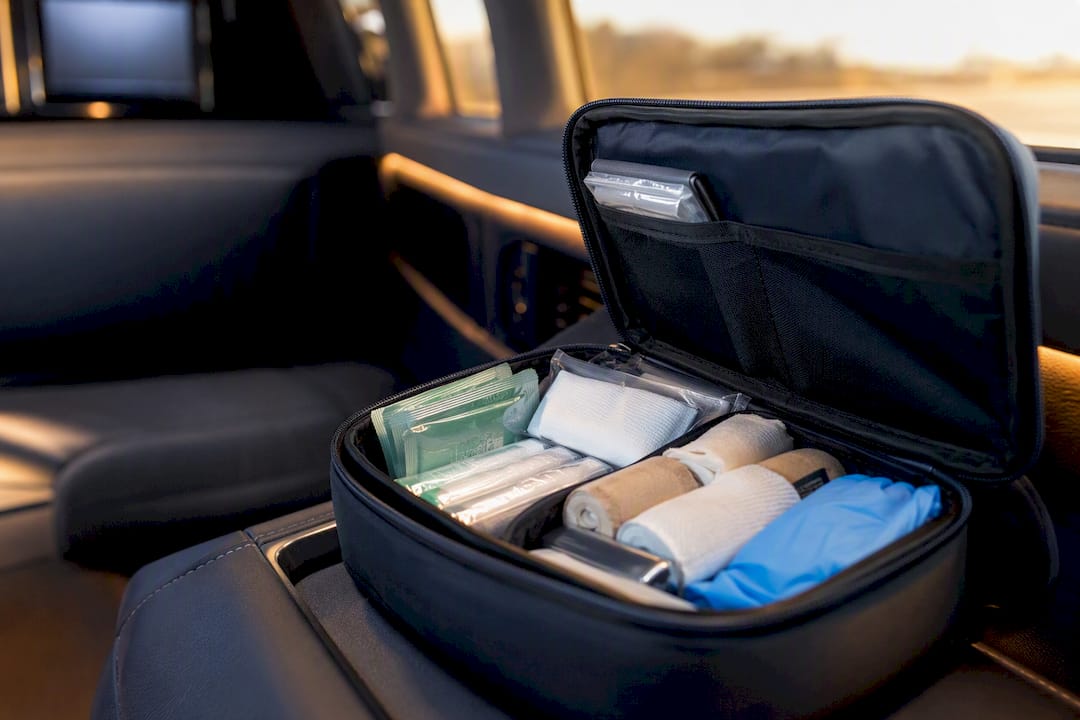
Every chauffeur handling VIP movements should carry basic first-aid training, and vehicles should be stocked with a properly maintained first-aid kit, not just a token box shoved under a seat. That's the baseline, not the ceiling.
For clients with known medical conditions, allergies, or mobility limitations, that information should be flagged in the pre-trip briefing on a need-to-know basis, shared only with the driver and any relevant support staff. A driver who doesn't know a passenger carries an EpiPen or has a mobility limitation can't respond fast enough when it matters.
Route planning should account for proximity to hospitals or urgent care facilities, especially for multi-hour movements or trips into unfamiliar areas. Dispatchers should have this information mapped in advance rather than searching for it during an emergency.
If a client travels with personal medical staff or a designated point of contact for health matters, that contact should be part of the same communication chain used for security and logistics, not a separate, disconnected line. Consistency across every layer of the protocol, security, medical, and logistical, is what prevents a small issue from becoming a scrambled response. And for any assignment involving elevated risk, that pre-trip briefing should also cover what happens if the client becomes unreachable or unresponsive mid-route, including who has the authority to divert the vehicle to the nearest facility without waiting for approval.
How Do You Handle Cultural and Protocol Etiquette for Different VIP Profiles?
A protocol built around one type of client falls apart the moment a genuinely different one shows up. Diplomatic guests, religious leaders, celebrities, and corporate executives all carry different expectations around formality, personal space, and how staff should address them.
Some cultures expect formal titles and a specific seating order within the vehicle. Others expect minimal fanfare and treat excessive formality as a red flag rather than a courtesy. Diplomatic protocol often dictates precise motorcade order, who enters or exits the vehicle first, and how flags or credentials are displayed, if at all.
Gender-based preferences matter too. Some clients, for cultural or religious reasons, prefer a chauffeur of a specific gender, and providers should be able to accommodate that request without treating it as unusual. Dietary and prayer-time accommodations during longer transfers also fall into this category, and a driver who knows to build in a brief stop without being asked reflects real training, not luck.
The safest approach is asking directly, through the event planner or the client's assistant, rather than guessing based on assumptions about someone's background. A short pre-trip questionnaire covering title preferences, seating arrangements, and any cultural or religious accommodations takes minutes to complete and prevents an awkward, avoidable misstep on the day of the event.
Why Does Post-Trip Debriefing Matter?
Every VIP movement should end with a short debrief, and skipping this step is one of the most common ways providers repeat the same mistakes trip after trip.
The debrief doesn't need to be elaborate. A five-minute conversation between the chauffeur, dispatcher, and event planner covering what went right, what caused delays, and whether any protocol should change next time captures most of the value. Was the buffer window long enough? Did the contingency plan actually work when it got tested?
Feedback from the principal's assistant or the event organizer should get documented too, even when it's positive. Patterns emerge over multiple debriefs that a single trip never reveals: a particular venue's loading dock always causes delays, or a specific hotel's valet staff needs advance notice for VIP arrivals.
That documentation also protects the organization. If a duty-of-care question ever comes up later, a record of consistent post-trip reviews demonstrates the organization was actively managing risk rather than treating each trip as a one-off. Feed those notes back into the pre-trip checklist for the next event, and the protocol actually improves instead of just repeating.
What Do Planners Get Wrong About VIP Transportation Protocols?
Most planners overcorrect toward the vehicle and undercorrect toward the workflow. A stretch limo with a driver who wasn't briefed properly is a bigger liability than a black SUV with a chauffeur who knows the contact chain cold.
The mistake I see most often is treating privacy and security as add-ons requested only for "important enough" clients, rather than defaults applied consistently. APEX LIMO builds every Austin booking, from a wedding party to a corporate executive transfer, around the same core disciplines: vetted chauffeurs, confirmed contact chains, and a contingency plan before wheels ever turn. That consistency is what actually prevents the five-minute failure window everyone worries about.
— Jason
Ready to Put These Protocols to Work in Austin?
Everything covered here, chauffeur vetting, driver briefings, flight tracking, contingency planning, isn't theoretical for APEX LIMO. It's the standard operating procedure for every Austin booking, whether it's a corporate executive transfer, a VIP security escort, or a high-visibility event shuttle for a delegation of guests.
When you request a quote, include the details that make the difference: flight or arrival time, number of passengers and luggage, any privacy or signage preferences, and whether a protective detail is traveling alongside. That information lets the team confirm the right vehicle, from a discreet sedan to a full-size SUV, and build the driver brief before the trip starts, not after. Commercial insurance and documentation are standard on every booking, so you're not left exposed if something outside anyone's control goes wrong.
If your event calls for personal-driver or hourly chauffeur coverage rather than a single transfer, that option exists too, built around the same vetting and briefing standards. Get a free limo quote and include your protocol requirements directly in the request. For ongoing executive coverage, the personal driver and hourly chauffeur service page outlines how that setup works.
Sources
The MLR Worldwide Service guide to VIP arrivals breaks down terminal and FBO staging in more operational detail than covered here. Palisade International's executive travel security guide expands on intelligence-led risk assessment for corporate travel programs. For a deeper look at layered protection architecture, the high-net-worth travel security framework covers digital and transport-layer engineering. TravelPerk's piece on VIP duty of care is worth reading for the corporate liability angle specifically.
- How to Arrange VIP Arrivals Properly | MLR Worldwide Service
- Travel Security Services for Executives: A 2026 Strategic Guide - Palisade International LLC
- White Glove Transportation Guide for VIP Travel - LuxPro USA
- High-Net-Worth Travel Security Framework • 2026 Intelligence Edition