

Executive event transport is a fully managed, professionally coordinated service built around the operational demands of high-profile corporate events, not just the act of moving people from one place to another. Understanding why executive event transport differs from standard transportation matters because the gap between the two is not about vehicle quality alone. It is about reliability guarantees, chauffeur training, real-time logistics management, and the protection of your event's reputation. APEX LIMO and providers operating at this level treat transportation as a core event function, not an afterthought. Standard rideshare and point-to-point car services simply cannot deliver that level of integration.
Why does executive event transport differ from standard transportation?
Executive event transport differs from standard transportation because it operates under contractual service-level agreements, not demand-based availability. Executive services guarantee vehicle arrival 15 minutes early with over 95% compliance. Standard rideshare services offer no such guarantee, with arrival windows that shift based on driver availability and surge conditions.
The distinction runs deeper than timing. Standard transportation is reactive. A driver picks up a passenger and delivers them. Executive transport is proactive. A dedicated coordinator monitors traffic, tracks flight changes, anticipates venue restrictions, and adjusts routes before problems arise. That difference in approach is what separates a functional ride from a managed service.
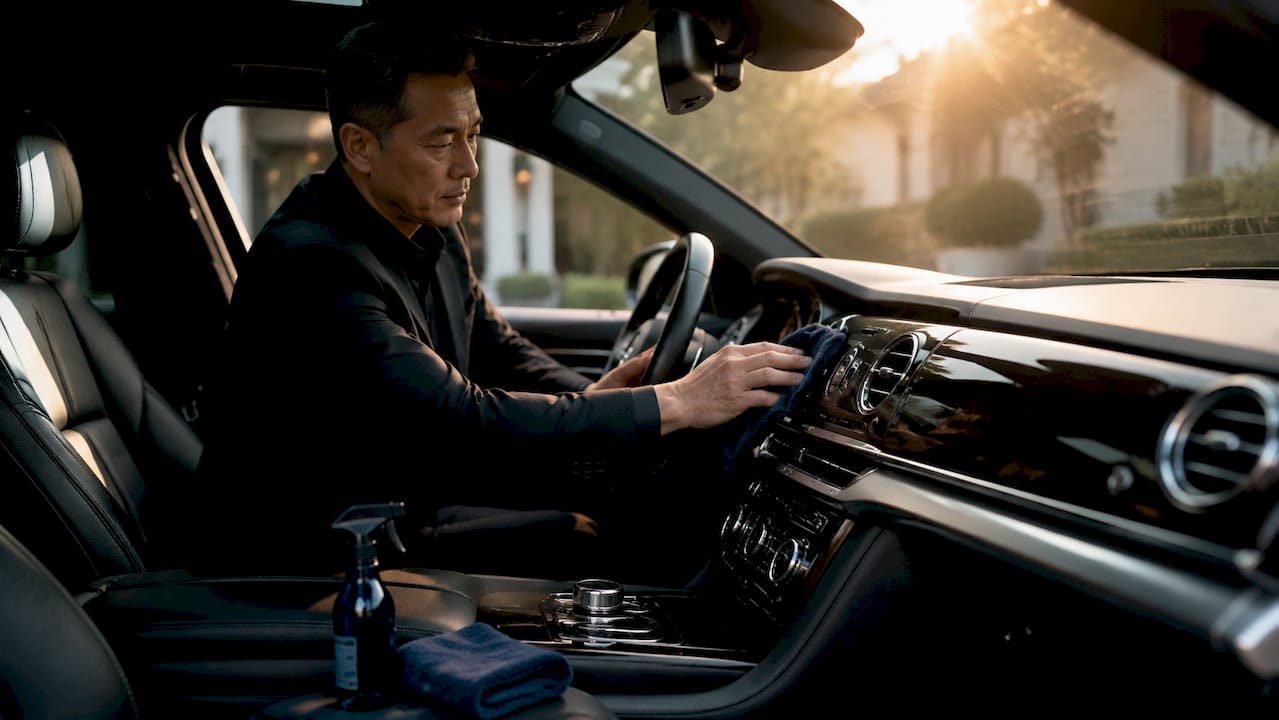
For corporate event planners, this matters because a single delayed arrival can disrupt a keynote, a board dinner, or a client presentation. The event rhythm and reputation are at stake with every vehicle dispatch. Executive transport treats each pickup as a scheduled event milestone, not a transaction.
What punctuality protocols look like in practice
- Chauffeurs receive the full event run-of-show, including session times and guest priority order.
- Routes are pre-driven or digitally mapped with contingency options for traffic and road closures.
- Coordinators maintain direct communication with on-site event staff throughout the day.
- Arrival sequencing prevents vehicle congestion at venue entrances during peak arrival windows.
- Backup vehicles are staged for high-priority guests when event schedules run long.
Pro Tip: Share your event's run-of-show with your transport provider at least 72 hours in advance. This single step allows proactive route planning and eliminates most day-of conflicts before they start.
What makes executive chauffeur training different from standard drivers?
Executive chauffeurs receive training that standard drivers do not. Corporate etiquette, security awareness, and confidentiality protocols are standard components of executive chauffeur preparation. A standard driver's qualification ends at a valid license and a clean record check.
This training gap has direct consequences for high-profile events. An executive chauffeur knows not to discuss a guest's itinerary, not to take personal calls during transport, and how to handle a VIP who needs to conduct a confidential call en route. These are not instincts. They are trained behaviors.
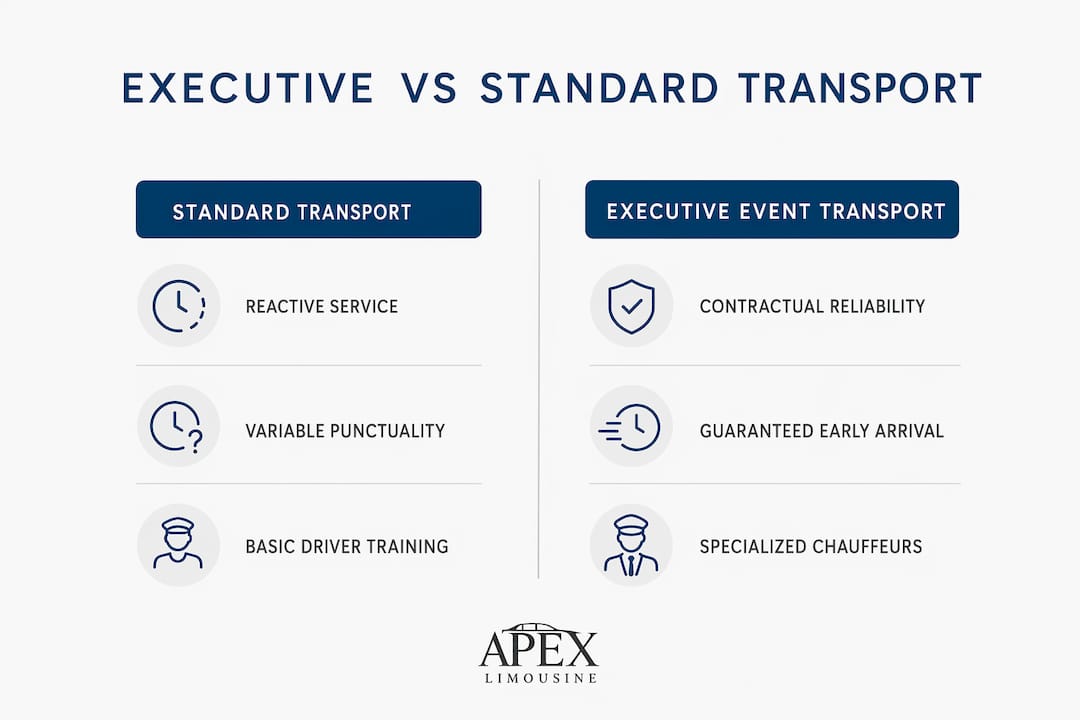
The safety infrastructure behind executive transport also exceeds standard requirements. Commercial-grade insurance, rigorous vehicle maintenance schedules, and thorough background screening are baseline expectations, not optional upgrades. For corporate clients hosting C-suite guests or international delegates, this level of vetting is non-negotiable.
Core service elements that protect your guests and your reputation
- Chauffeurs trained in corporate protocol and discretion, not just driving.
- Vehicles inspected before every dispatch, not just on a scheduled maintenance cycle.
- Background checks that meet commercial carrier standards, not consumer app minimums.
- Confidentiality maintained for all guest conversations and itinerary details.
- Professional presentation standards enforced for every client interaction.
Pro Tip: Ask your transport provider directly whether chauffeurs receive ongoing training or only pre-hire screening. Ongoing training signals a provider that treats service quality as a process, not a one-time credential.
How does executive transport support productivity during events?
Executive transport reclaims time that standard transportation wastes. Executives traveling three times weekly can save approximately 234 productive hours annually by delegating driving to a professional chauffeur. That figure reflects time spent working, preparing, or recovering rather than navigating traffic.
The vehicle itself becomes a functional workspace. A private, quiet cabin with reliable connectivity allows a guest to review a presentation, take a confidential call, or decompress between sessions. Standard transportation offers none of that. A shared rideshare or shuttle provides no privacy and no guarantee of a quiet environment.
Executive travel management prioritizes productivity and flexibility over cost minimization. Standard business travel management does the opposite. That philosophical difference explains why executive clients are willing to pay a significant premium. The return on that investment shows up in what gets accomplished before the first handshake at the event.
"Transportation forms the first and last branded touchpoint of an event. Failure to make it integral to the event plan causes logistical failure and guest dissatisfaction that no amount of excellent programming can fully repair."
The flexibility component is equally important. Events run long. Speakers go over time. Dinners extend. Executive transport accommodates those changes in real time because coordinators are monitoring the event, not waiting for a call. Standard services require the guest to manage their own rebooking, which adds cognitive load at exactly the wrong moment.
Why should transportation be treated as a core event pillar?
Transportation failure treated as a peripheral concern leads directly to logistical breakdown and staggered arrivals. Luxury event experts are consistent on this point: transport planning must be embedded in the event's operational structure from the start, not bolted on at the end.
The practical requirement is a detailed run-of-show shared with the transport provider. This document enables proactive route planning, arrival sequencing, and management of venue-specific restrictions before the event day. Without it, the transport team is reactive, and reactive transport at a high-profile event creates visible problems.
Real-time trip monitoring and 24/7 access to logistics coordinators are the operational backbone of executive transport during live events. These capabilities are standard in executive services and rare in standard offerings. They allow the transport team to absorb cascading delays caused by weather, extended sessions, or last-minute guest changes without those delays reaching the guest experience.
| Planning element | Standard transport | Executive event transport |
|---|---|---|
| Arrival guarantee | Demand-based, variable | Contractual, 15 minutes early |
| Route management | Driver-initiated | Coordinator-managed, pre-planned |
| Event communication | None | Integrated with run-of-show |
| Delay response | Guest-managed rebooking | Real-time coordinator adjustment |
| Guest privacy | Not guaranteed | Enforced by training and protocol |
Pro Tip: Treat your transport provider as a logistics partner, not a vendor. Include them in pre-event planning calls the same way you would include your AV team or catering manager.
Key Takeaways
Executive event transport is defined by contractual reliability, trained personnel, and operational integration with the event itself, making it fundamentally different from standard point-to-point transportation.
| Point | Details |
|---|---|
| Punctuality is contractual | Executive services guarantee arrival 15 minutes early with over 95% compliance, unlike variable rideshare windows. |
| Chauffeur training is specialized | Corporate etiquette, security awareness, and confidentiality protocols separate executive chauffeurs from standard drivers. |
| Transport reclaims productive time | Executives can recover over 200 hours annually by delegating driving to a professional chauffeur. |
| Event integration prevents failure | Sharing a run-of-show with your transport provider prevents staggered arrivals and day-of logistical breakdowns. |
| Real-time coordination is the differentiator | Monitoring dashboards and dedicated coordinators absorb cascading delays before they reach the guest experience. |
Executive transport is project management, not a ride service
I have watched event planners spend months perfecting a program, then treat transportation as a line item to minimize. The result is almost always the same: a VIP arrives flustered, a session starts late, and the tone of the first hour never fully recovers.
What I have learned from working with high-profile corporate events is that the transport plan deserves the same attention as the agenda itself. Executive transport is not a luxury upgrade. It is a project management function. It requires sequencing, contingency planning, and a provider who understands that their job is to protect the event's momentum, not just deliver a passenger.
The providers worth trusting are the ones who ask for your run-of-show before you offer it. They want to know session lengths, guest priority tiers, and venue access restrictions. That curiosity is the signal. It tells you they are thinking about your event as a system, not as a series of pickups.
The emotional temperature of an event is set before the first guest walks through the door. A guest who arrives calm, on time, and well-treated is primed to engage. A guest who spent 20 minutes waiting for a car that never confirmed is already behind. That gap is entirely within your control as a planner, and the decision starts with who you hire to move your guests.
— Jason
APEX LIMO's executive chauffeur service for corporate events
Corporate events in Austin demand transport that performs as reliably as the rest of your program. APEX LIMO's executive chauffeur service is built specifically for high-profile events, with dedicated coordinators, VIP-trained chauffeurs, and a fleet designed for corporate guest needs.

Every APEX LIMO engagement includes pre-event planning support, real-time coordination on the day, and chauffeurs trained in corporate etiquette and confidentiality. The fleet options cover executive sedans to full-size SUVs, matched to your guest list and event profile. For event planners who need transport to perform as a core event function, APEX LIMO delivers that standard consistently. Request a quote and get your event transport plan started.
FAQ
What is executive event transport?
Executive event transport is a professionally managed transportation service designed for corporate and high-profile events, featuring contractual punctuality guarantees, trained chauffeurs, and real-time logistics coordination.
How does executive transport differ from a standard rideshare?
Executive transport operates under service-level agreements with fixed pricing and guaranteed early arrival, while standard rideshare services use dynamic pricing and demand-based availability with no punctuality guarantee.
Why does chauffeur training matter for corporate events?
Executive chauffeurs are trained in corporate etiquette, security awareness, and confidentiality, which protects both the guest experience and sensitive information during transit.
How much time can executives save with professional transport?
Executives who travel frequently can recover over 200 hours annually by delegating driving, using transit time for productive work instead of navigation.
When should a transport provider receive the event run-of-show?
Share the run-of-show at least 72 hours before the event. This allows the provider to plan routes proactively and manage venue restrictions before the day-of pressure begins.