
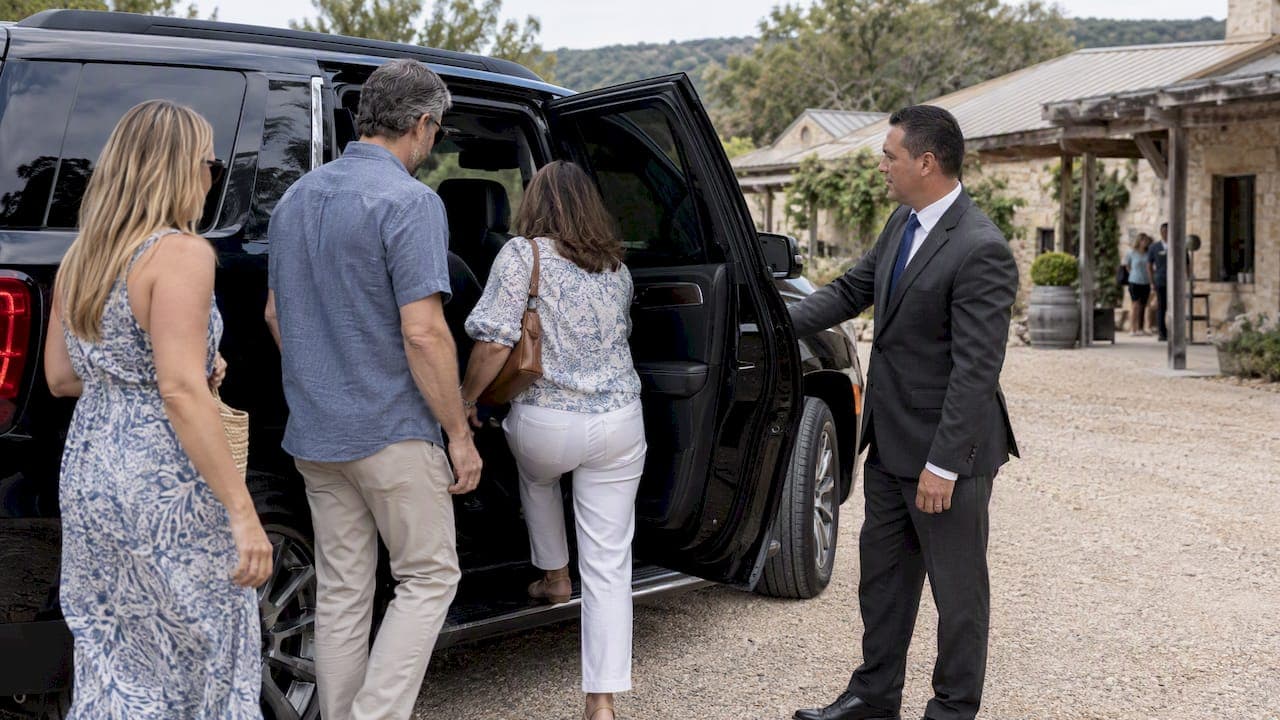
The most important wine tour safety tip is also the simplest: decide who is driving before you taste anything, and make sure that person will not drink. Everything else, from eating breakfast to wearing the right shoes, matters, but none of it makes driving after tasting safe. This guide covers the full picture for a Texas Hill Country or Austin-area tour: transportation, winery rules, pacing, group management and the small details people forget.
TL;DR
- Book a sober chauffeur or a genuinely non-drinking driver before the tour, and include the return ride in the reservation.
- Confirm each winery's policy on group size, large vehicles, reservations and outside drinks before you leave.
- Eat first, drink water between pours, and never treat spitting or small pours as a license to drive.
- Wear a seat belt in every vehicle, including limos, vans and party buses.
- For weddings, proms, corporate outings and VIP groups, ask for a written plan with pickup contacts, stops and an emergency number.
Table of Contents
- Why the ride is the whole safety plan
- Before you go: the planning checklist
- Know the winery and Texas rules before you arrive
- Pacing: how to enjoy the day without wrecking it
- Safety inside the vehicle
- Managing a group: weddings, proms, corporate outings and VIPs
- Planning transportation the way a crowded night out demands
- Perspective: what we see on Austin wine tours
- Booking a chauffeured wine tour with us
- FAQ
- Sources
Why the ride is the whole safety plan
People like to look for a formula: how many tastings are safe, how long to wait, which wines are lighter. There isn't a reliable one. CDC guidance is behavioral, not mathematical: plan ahead, don't drive while impaired, don't ride with an impaired driver, and don't let friends drive impaired. None of the official sources we reviewed give a universal safe number of pours, so we will not offer one either.
That is useful, because it removes a decision you are badly placed to make. After a few tastings, "I feel fine" is not a test. The professional answer is to take the driving decision off the table entirely.
The stakes are practical as well as human. NHTSA notes that a first-time impaired-driving offense can cost the driver upwards of $10,000 in fines and legal fees. A hired driver for a day costs a fraction of that.
What counts as a sober driver
A designated driver who has "just one" is not a designated driver. The person behind the wheel should drink nothing at all. A professional chauffeur is the cleanest option because driving is their job, they are not part of the party, and the return ride is booked rather than improvised. If a friend is driving instead, agree on it in advance and hold them to it. Don't let the role shift partway through the afternoon.
It also works the other way. Never accept a ride home from someone who has been tasting, even if they say they only had a few small pours.
Before you go: the planning checklist
Most problems on wine tours start with a vague plan. A few calls and messages the week before solve nearly all of them.
- Fix your headcount. Know the final number of guests, including anyone who may join late.
- Choose the stops. Three or four wineries is a comfortable day. Cramming in more means rushing, and rushing leads to gulping.
- Reserve every stop. Reservations are not a luxury in wine country. Fredericksburg-area wineries may require them for larger parties.
- Confirm vehicle access. Some venues limit limousines or buses. Ask before you book the vehicle, not when you arrive.
- Share contacts. Give the chauffeur one named group leader with a working phone number, and get the chauffeur's number in return.
- Set the return time. Put the final pickup in writing, with a buffer, so nobody is stuck waiting at a tasting room that is closing.
- Mention accessibility needs. If a guest uses a wheelchair, a cane or struggles with steps, tell the operator and the wineries up front.
If you are still choosing where to go, our guide to the best wineries near Austin for day trips and tastings is a good starting point, and the Hill Country wine tour limo guide walks through the logistics of the longer drive.
Know the winery and Texas rules before you arrive
Texas wineries operate under Texas Alcoholic Beverage Commission (TABC) rules. The Fredericksburg Wine Road 290 FAQ states that all of its wineries follow TABC rules and that it is against the law to serve alcohol to minors or to anyone intoxicated or at risk of becoming intoxicated. That last part surprises some groups. A tasting room can stop pouring for a guest, even one who has a designated driver.
Service hours and exceptions vary by permit type and day, so check the TABC FAQ and each winery's own reservation page instead of relying on a generic tour schedule you found online.
Outside drinks and bottles you buy
Most wineries do not allow outside alcohol. Expect to leave your own bottles at home. The reverse question matters too: what happens to the bottles you buy during the day?
Do not assume that a large, private or professionally driven vehicle makes drinking on board legal. NHTSA's discussion of open container laws explains that these laws generally prohibit possessing an open alcoholic container and drinking it in the passenger area of vehicles on public highways, with specified exceptions for certain vehicle types. The exact application in Texas and the operator's own policy still control your trip. Ask the company what it allows before you bring anything aboard, and keep purchased bottles sealed.
Pacing: how to enjoy the day without wrecking it
Safe transportation protects you on the road. Pacing protects the rest of your day, and your dignity, inside the tasting room. None of this makes driving safe, but it makes the experience better for everyone.
- Eat a real meal first. Don't arrive on an empty stomach, and plan a proper lunch in the middle of the tour, not just crackers.
- Drink water between stops. Ask the tasting room for a water glass and use it.
- Share flights. Splitting a tasting between two people halves the pours without halving the variety.
- Use the spit bucket. Professionals do it. Just know that spitting reduces how much you swallow but does not make driving after tasting safe.
- Skip the hard liquor and beer. Wine-country transportation guidance, such as the Temecula Valley Winegrowers Association's responsible partner program, discourages mixing in spirits and beer during a tasting day. Starting the morning with cocktails is a common reason groups fall apart by mid-afternoon.
- Learn the basics of tasting. Looking, smelling and then sipping, as a wine society's sampling guide lays out, naturally slows the pace. Our wine tasting etiquette guide covers perfume, pours and planning the ride.
About the "30/30 rule" and other wine numbers
People searching for wine tour safety often run into the "30/30 rule" or "75 rule." These are serving-temperature rules of thumb, rough guides for moving wine from cellar temperature toward serving temperature. Conventional guidance, such as this Missouri State winery material, puts red wine at about 65°F and white wine at 50 to 60°F. They say nothing about sobriety. Never use a number to decide whether you can drive.
The one useful number is the size of a standard drink. NHTSA says a standard drink contains about half an ounce of alcohol, which is roughly one 5-ounce glass of wine, as explained on its drunk driving page. Tasting pours are smaller, but they add up faster than most people expect over four stops.

Safety inside the vehicle
A luxury vehicle does not suspend the laws of physics. CDC says that wearing a seat belt reduces the risk of dying or being seriously injured in a crash by about half. That applies in a sedan, an SUV, a van and a party bus alike.
Practical rules for the cabin:
- Buckle up before the vehicle moves, every trip, every seat.
- Don't stand or move around while the vehicle is in motion, even in a stretch limousine with room to do so.
- Keep walkways and doors clear of shopping bags and boxed wine.
- Pack a small bag with water, snacks, sunscreen, phone chargers and any medically necessary items.
- Wear comfortable, weather-appropriate shoes. Gravel paths, vineyard rows and wet patios are common on tour days.
Managing a group: weddings, proms, corporate outings and VIPs
Groups raise the stakes. One guest who arrives already drunk, or one who becomes disruptive, can affect the whole day and the wineries' willingness to host you again. Industry guidance on responsible transport emphasizes advance communication with wineries, updating them on your arrival, and removing disruptive guests when asked, rather than leaving the venue to deal with it alone.
For any group booking, ask the operator for a written operational plan that covers:
- Passenger count and vehicle capacity, including room for purchases
- Pickup locations and a named contact at each
- Winery names, reservation times and group-size rules
- An emergency contact and what happens if a guest becomes ill or unruly
- A sober chauffeur who stays responsible for driving the whole time
Special cases
Bridal parties and bachelorette groups. Weddings stack timing pressure on top of drinking. If the tour is part of a celebration weekend, read our Austin wedding limo guide and our bachelorette planning piece to align the schedule with everything else going on.
Corporate and client outings. The host is responsible for the guests' experience. Appoint a single coordinator, set a firm return time and keep an eye on guests who are traveling and may be tired. Our corporate event transportation guide covers the coordination side.
VIPs, artists and influencers. Privacy, security and timing matter more. Share the full itinerary with the operator in advance and ask what level of escort or discretion is needed.
Anyone under 21. TABC rules prohibit serving alcohol to minors. A winery visit with an under-21 guest, such as a family outing, should be cleared with each venue first. Prom groups should not be on a tasting itinerary at all.
Allergies. Wineries can expose guests to bee stings, sulfites and other allergens. Bring any prescribed medication, such as an epinephrine auto-injector, and tell the group leader where it is.
Planning transportation the way a crowded night out demands
The habits that keep a wine day safe are the same ones that keep any night out safe: choose the route, know where you are being picked up, and have a plan for the end of the night. A nightlife precinct safety guide for Brisbane makes that point well for a very different city, and the principle carries over to wine country: arrange the ride home before you arrive.
Perspective: what we see on Austin wine tours
We run wine tours, and the same few things decide whether a day goes well. Nearly every difficult situation we have seen traces back to a plan that was vague at the start: no final headcount, no confirmed stop, no agreed pickup time.

Our view is that the chauffeur's job is bigger than driving. A good one confirms the stops with the group leader, follows the timing, keeps the vehicle ready and speaks up early if something is going wrong. That is why we build every booking around a custom plan, with vetted and highly trained chauffeurs, and why we keep flat-rate pricing with no surge fees, so nobody is tempted to cut the evening short or squeeze in extra stops to save money.
Our advice to any group leader: book the return ride first, then choose the wineries. If the end of the day is secure, the rest of it is easy to enjoy.
— Jason
Booking a chauffeured wine tour with us
Our Austin Wine Tour Experience is built around the checklist above. We tailor the vehicle, stops and timing to your group. Published hourly rates start at $120 per hour for the Executive Black Sedan, $160 per hour for the Luxury Black SUV, $175 per hour for the Executive Sprinter Van, $195 per hour for the Classic Stretch Limousine, $275 per hour for the SUV Stretch Limousine and $350 per hour for the Party Bus. See every vehicle on our fleet page, or tell us about your group through our main site and we will put together a plan with a sober chauffeur from the first pickup to the last drop-off. Planning more than wine? Our full service list covers airport transfers, corporate cars and more.
FAQ
Is it safe to drive myself between wineries?
Only if you do not drink. Official guidance from CDC is to plan transportation before drinking and to avoid driving impaired. There is no reliable way to judge your own impairment after tasting, so a sober chauffeur or non-drinking driver is the safe choice.
Does spitting make it safe to drive?
No. Spitting reduces how much alcohol you take in, but it does not guarantee you are unimpaired, and the sources we reviewed do not establish a safe number of pours. If you plan to taste, arrange a sober ride.
Can we bring our own wine or drink in the vehicle?
Don't assume so. Wineries generally do not allow outside alcohol, and open container laws limit drinking in vehicles on public roads, with exceptions. Ask the operator about its policy and keep purchased bottles sealed until you are home.
How many wineries should we visit in one day?
Three or four is comfortable for most groups. That leaves time for lunch, water and travel without rushing. Confirm reservations and group-size limits at each stop, since larger parties may need to book ahead.
What is the 30/30 rule for wine?
It is a rough serving-temperature guide for cooling wine, not a drinking rule. It cannot tell you whether someone is sober enough to drive.
Sources
- CDC: What You Can Do to Prevent Impaired Driving
- NHTSA: Drunk Driving
- NHTSA: Open Container Laws
- TABC: FAQs
- Fredericksburg Wine Road 290: FAQs
- Temecula Valley Winegrowers Association: Responsible Partner Program
- Missouri State Winery and Distillery material
- How to Sample Wine, OCWS