
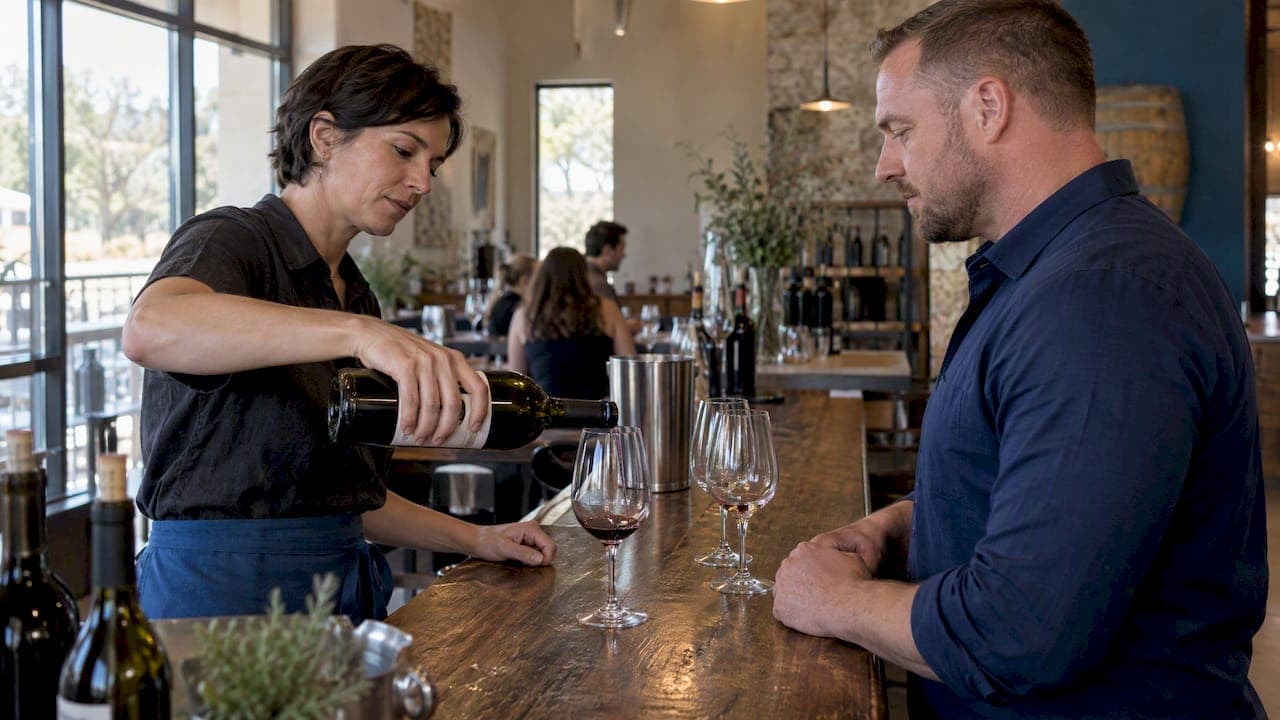
Arrive on time for your reservation, skip the perfume, pace yourself through each pour, and tip when a pourer goes out of their way for you. These habits exist because tasting rooms run on tight schedules and shared sensory space: a late arrival disrupts the next group's flight, and strong scents ruin the aromas everyone paid to experience. Get reservations, scent, and pacing right, and the rest of the visit tends to fall into place.
TL;DR:
- Groups of roughly 8 to 12 or more usually need advance reservations; appoint one contact to confirm the headcount, payment, arrival time, and any deposit.
- Arriving more than 10 or 15 minutes late can cost your reservation; call if delayed, and wait outside if you arrive before your booked time.
- Hosts usually serve whites before reds and dessert wines; samples run 1 to 2 ounces, and flights often include four to six pours.
- Fees run $10 to $25 per person and may count toward a bottle; tip about $5 for attentive service and $10 or more for private tastings.
- Arrange a designated driver or car before tasting; rural rideshare service can be unreliable, and staff may refuse service to visibly impaired guests.
Table of Contents
- Before You Go: Reservations, Dress, and Scent Prep
- How to Taste Like You Know What You're Doing
- Visiting With a Group or Arriving by Limo
- Tasting Fees, Tipping, and Buying
- Getting There and Getting Home Safely
- Your Day-Of Checklist
- Showing Up Late or Early Without Disrupting the Schedule
- Holding the Glass and Toasting Without Looking Clumsy
- What to Talk About at the Bar
- Taking Photos Without Being That Guest
- Treating the Property and Other Guests With Care
- Why Logistics Make or Break a Tasting Day
- Plan the Ride So You Can Focus on the Wine
- FAQ
- Sources
Before You Go: Reservations, Dress, and Scent Prep
Most tasting rooms now expect a reservation, even for small groups. Walk-ins still work at many casual spots, but anything resembling a planned outing, especially groups of six or more, benefits from a call or online booking ahead of time. Larger parties face harder rules: wineries increasingly require advance reservations for groups of 8 to 12 or more guests so they can staff and seat accordingly. Booking also protects you from showing up to a fully private event with no room left at the bar.
Before you leave the house, pack a government-issued ID, your reservation confirmation, and a payment method. If you're visiting somewhere with picnic grounds or limited accessibility, a quick call confirms what's allowed and what isn't.
What you wear matters more than people expect. Tasting rooms often sit on working vineyards with gravel paths, uneven floors, and outdoor seating.
- Dress in layers since cellar areas run cooler than patios.
- Wear closed-toe shoes if a vineyard walk is part of the visit.
- Skip anything overly flashy or offensive. Tasting rooms are shared, semi-formal spaces.
Scent discipline is the detail most beginners miss. Heavy perfumes, colognes, and strongly scented lotions interfere with a taster's ability to smell the wine and with everyone standing near you at the bar. The same goes for gum, mints, and a heavy lunch right before your appointment. Brush your teeth earlier in the day rather than immediately before tasting, since mint toothpaste flattens your palate.
Eat something substantial beforehand and drink water throughout the day. An empty stomach combined with several pours is a fast route to feeling the wine more than you intended. If the winery allows outside snacks, stick to neutral options like crackers or bread rather than anything spicy or strongly flavored.
Pro Tip: Call the tasting room the morning of your visit to confirm your reservation time and ask whether the patio or vineyard walk is open that day. A two-minute call avoids most day-of surprises.
How to Taste Like You Know What You're Doing
Tasting rooms typically pour in a specific order for a reason: whites first, then rosé, then reds, finishing with dessert or fortified wines. Starting light and working toward bold keeps your palate from getting overwhelmed by tannin or sugar before you've tasted the delicate wines. If a host suggests a different order based on that day's lineup, follow their lead. They know how their wines interact.
Portion control matters too. Most tasting rooms pour 1 to 2 ounces per sample, and typical pours stay small specifically because flights add up fast across five, six, or more wines in a single sitting. A standard flight runs four to six pours, and most hosts expect you to taste rather than finish each glass.
The actual mechanics of tasting follow a simple sequence:
- Hold the glass by the stem, not the bowl, so your hand doesn't warm the wine or smudge the glass.
- Look at the color and clarity by tilting the glass against a white background.
- Swirl gently to release the aromas.
- Sniff before you sip. Most of what you perceive as flavor actually comes through smell.
- Sip a small amount and let it coat your palate.
- Spit or swallow, your choice, using the dump bucket on the bar.
That last step trips people up more than any other. Spitting into a dump bucket is a standard, professional practice rather than something that signals you don't appreciate the wine. Sommeliers and buyers spit constantly specifically so they can taste more wines while staying clear-headed. Nobody at the bar will think less of you for using it.
A reasonable pacing rule: take two sips per pour and stop there unless you're genuinely deciding whether to buy a bottle. If a host offers you a refill or an extra pour you don't want, a simple "I'm good for now, thank you" closes the offer without awkwardness.
Good questions make the visit better for you and the host. Ask about the vintage, which vineyard block the grapes came from, how much oak aging the wine saw, or what foods it pairs well with. Hosts respond well to engaged, curious questions and often pour more generously or share details they'd skip with a quiet group. If a wine isn't to your taste, there's no need to perform disappointment. A simple "this style isn't really for me" lands fine and keeps the mood pleasant for everyone else at the bar.
Visiting With a Group or Arriving by Limo
Group visits run on different rules than a couple stopping in on a Saturday afternoon. Wineries increasingly treat large bookings as events that need advance planning rather than something they can absorb on the fly.
- Groups of roughly 8 to 12 or more typically need a reservation made well in advance so the winery can prepare space and staff.
- One point of contact should handle the booking, payment, and arrival time to avoid confusion at check-in.
- A single credit card and a designated contact person smooth the entire visit, and some wineries ask for a per-person deposit tied to the group size.
- Outside alcohol is usually prohibited on winery property, and staff may refuse service entirely if that rule gets ignored.
- If your group arrives by limo or party bus, the driver typically checks in separately, confirms parking, and may need to show that any alcohol carried on board stays on the vehicle rather than coming inside.
If you're planning a multi-stop day with a chauffeur, share the full guest count with the winery ahead of time rather than rounding down. An accurate headcount is what lets the tasting room seat you properly instead of splitting your group or turning people away. Once you're there, keep the volume moderate, especially in smaller tasting rooms that double as someone's workplace, supervise any children in the group, and stay within the area the host has set up for you rather than wandering into staff-only sections.
Tasting Fees, Tipping, and Buying
Expect to pay a tasting fee at most stops. Fees commonly run from about $10 to $25 per person, and many wineries waive or credit that fee toward a bottle purchase, though policies vary enough that it's worth asking when you check in.
Tipping isn't legally required but is genuinely appreciated when a host goes beyond pouring the standard flight.
- A tip of around $5 per person is a fair baseline for attentive, friendly service.
- $10 or more fits a sit-down tasting, a private session, or a host who spent real time walking you through the wines.
- Larger groups should scale the tip accordingly rather than leaving a flat $5 for a party of ten.
- Tipping on a bottle purchase isn't standard practice. Check your bill for an included gratuity line before adding one yourself.
Many tasting rooms are small, family-run operations where your purchase directly supports the next vintage rather than a corporate wine brand. If you genuinely enjoyed a wine, buying a bottle or two is a meaningful way to show it, and it's generally a better gesture than a bigger cash tip if you're choosing between the two.
Getting There and Getting Home Safely
Plan your ride before you plan your flights of wine. Even small pours add up across several wineries in one day, and the math catches people off guard more often than they expect. A designated non-drinking driver or a pre-booked car is the only reliable way to taste freely without worrying about the drive home.
- Decide on transportation before you leave, not after the second tasting room.
- A hired chauffeur handles pacing, parking, and timing across multiple stops, which matters more than it sounds once you're juggling a cooler of purchased bottles.
- Rideshare apps can be unreliable in rural wine country, so call ahead to confirm parking and local access if you're not arranging dedicated transport.
- Staff can and will refuse to pour for anyone who appears intoxicated, since tasting-room employees are required to cut off visibly impaired guests as a matter of safety and liability.
Pro Tip: Book transportation for the entire day rather than stop-by-stop. A single driver who knows your full itinerary keeps timing tight and avoids the scramble of calling a new ride from a winery parking lot with spotty service.
Your Day-Of Checklist
Run through this before you walk up to the first bar:
- Confirm your reservation, and pack ID and a payment method.
- Arrange transportation and skip the perfume or cologne.
- Eat a real meal and bring water for the drive.
- Hold the glass by the stem and follow the tasting order the host suggests.
- Pace yourself to two sips per pour and use the dump bucket without hesitation.
- Ask about the vintage, vineyard, or oak program.
- Know the tasting fee going in, and tip if the service stands out.
- Buy a bottle if something genuinely won you over.
- For groups, confirm headcounts ahead of time and designate one contact person.
- Keep volume moderate and supervise kids if they're along for the visit.
Showing Up Late or Early Without Disrupting the Schedule
Tasting room schedules run tighter than they look. A reservation at 2:00 PM often means the room, staff, and sometimes a specific table are set aside for your group at that exact time, with another party booked right after you.
Arriving more than 10 or 15 minutes late can mean losing your slot entirely, especially at smaller wineries that run one group through at a time. A quick call ahead if you're running behind gives the host a chance to adjust rather than assume you're a no-show. The same courtesy applies if you're running early: showing up well before your window can put you in the middle of another group's tasting, so it's worth waiting in a tasting room's outdoor seating or walking the grounds until your actual time arrives. Groups arriving by limo or party bus should build in extra buffer time, since parking and coordinating everyone off the vehicle takes longer than a single car pulling up.
Holding the Glass and Toasting Without Looking Clumsy
Hold your wine glass by the stem or the base, never by the bowl. Your hand's warmth changes the wine's temperature, and fingerprints on the bowl make it harder to judge the color and clarity, which is part of the actual tasting process.
Clinking glasses is a social gesture, not a tasting-room requirement, and it's worth reading the room before you do it. A casual flight among friends is a fine moment for a light toast, but a quieter tasting focused on technical notes and discussion is usually not the setting for it. If you do clink, a gentle touch is plenty since fine stemware chips easily. When in doubt, a verbal "cheers" without the physical clink accomplishes the same thing without any risk to the glassware.
What to Talk About at the Bar
Conversation at a tasting bar works best when it stays curious rather than critical. Questions about the vintage, the specific vineyard block, how long the wine aged in oak, or what it pairs well with tend to open up the host rather than put them on the spot. These kinds of questions signal genuine interest and often lead to a more generous, informative pour than a group that stays quiet or talks over the host.
Steer away from loudly criticizing a wine you don't like. If something misses for you, a simple, low-key comment like "this style isn't quite my preference" gets the point across without souring the mood for the rest of the group at the bar. It's also worth keeping side conversations at a volume that doesn't drown out what the host is saying, particularly in smaller rooms where everyone is sharing the same space. Save business calls and extended personal conversations for outside the tasting room.
Taking Photos Without Being That Guest
Most wineries welcome photos of the vineyard, the tasting room, and your flight of wine, and plenty encourage tagging them on social media. That said, it's worth asking before photographing other guests, staff, or areas marked as private, like barrel rooms or working cellar spaces that aren't part of the public tour.
Keep phones down during the actual tasting sequence rather than filming every pour, since it slows the flow for the rest of the group and pulls your own attention away from the wine in front of you. A quick photo of the label or the view from the patio takes a few seconds; a full video production at the bar does not fit the pace of a shared tasting. If a winery has a no-photography policy in certain areas, usually posted near barrel rooms or production facilities, that's worth respecting without needing a staff member to point it out twice.
Treating the Property and Other Guests With Care
A tasting room is often someone's workplace and, in many cases, their home. Small courteous habits, like disposing of your own trash and staying off vineyard rows that aren't part of the tour, go a long way toward keeping a winery's relationship with its neighbors intact, particularly in rural areas where noise and traffic complaints can affect a winery's ability to host visitors at all.

Stick to marked paths and seating areas rather than wandering into vine rows or staff-only sections. If you brought children or pets, keep them close and off the landscaping, since a lot of tasting rooms sit next to working production spaces with equipment that isn't guest-friendly. Other guests are sharing the same bar and the same quiet, so keeping your group's volume reasonable and giving the pourer your attention when they're speaking makes the visit better for everyone standing nearby, not just your own party.
Why Logistics Make or Break a Tasting Day
The best tasting days we've seen have nothing to do with the wine list and everything to do with the planning behind them. When transportation, timing, and headcounts are handled before anyone pulls up to the first winery, guests actually relax into the experience instead of watching the clock or arguing about who's driving.
Good pacing between stops, a driver who already knows the day's itinerary, and someone else handling parking and punctuality let a group focus on what they came for: tasting, asking questions, and enjoying the wine without the usual logistics stress pulling focus away from the bar.
— Jason
Plan the Ride So You Can Focus on the Wine
A wine tasting day runs smoother when someone else is managing the schedule, the parking, and the sober driving while you focus on the pours in front of you. We build each Austin Wine Tour Experience around your actual stops, timing buffers for late checkouts and lingering conversations at the bar, and a chauffeur who already knows how to navigate winery check-in and group coordination.
For a day with multiple stops, our fleet ranges from an Executive Black Sedan starting at $120 per hour for smaller groups up to a Party Bus starting at $350 per hour for a full celebration, so the vehicle matches your group size rather than the other way around. If you're mapping out which wineries to visit before booking, our guide on planning a short wine tour itinerary walks through realistic pacing for two to three stops in a single day.
If you're coordinating a larger group tasting alongside another event, like a shower or a corporate outing, a planner's guide to setting up group logistics pairs well with having a single point of contact for your transportation booking too. Check availability for your date and group size, and we'll build the day around your actual stops rather than a generic route.

FAQ
Is it rude to spit out wine during a tasting?
No, spitting into the provided dump bucket is standard practice at tasting rooms, and professionals do it specifically to taste more wines while staying clear-headed. Hosts expect it and won't think twice if you use the bucket instead of finishing every pour.
How much should I tip at a wine tasting?
A tip of around $5 per person is reasonable for attentive service, with $10 or more fitting a private or sit-down tasting where the host spent extra time with your group. Tipping on bottle purchases isn't standard, so check your receipt for an included gratuity line first.
What should I avoid wearing to a tasting room?
Avoid heavy perfume, cologne, or strongly scented lotion, since these interfere with your ability to smell the wine and affect other guests nearby. Dress in layers with closed-toe shoes, since many tasting rooms involve outdoor seating or a walk through the vineyard.
How many wineries can you visit in one day?
Most visitor guides suggest limiting a day to a handful of wineries to keep pacing reasonable and avoid rushing through tastings. Hiring a chauffeur for the day helps manage timing between stops so you're not cutting a tasting short to make the next reservation.
Do you need a reservation for a wine tasting?
Many tasting rooms now require reservations, especially for groups, and larger parties of roughly 8 to 12 or more almost always need to book in advance. Calling ahead, even for a small group, confirms availability and any group-specific requirements before you arrive.
Sources
- Wine Tasting Etiquette: The Do’s and Don’ts of Wine Tasting
- Large group guidelines (Lake Erie Wine Country)