
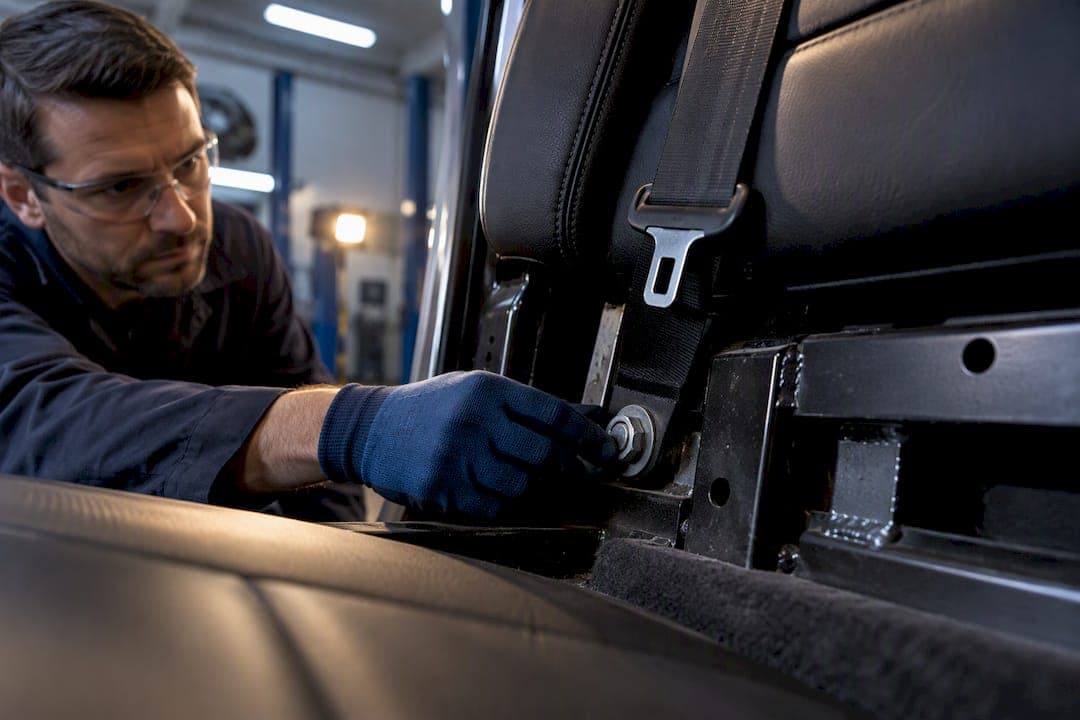
Limo safety standards are fragmented: federal rules exist, but conversions and state differences leave gaps. Before you book, verify three things: the vehicle's last inspection date, the type of seat belts installed at every position, and whether an alterer certified any structural modifications. Skipping that check means trusting a stretch limousine's safety to whichever state happened to register it.
TL;DR:
- Verifying the vehicle's last inspection date, seat belt type at each seat, and certification of structural modifications is essential to ensure limousine safety.
- Federal safety standards apply mainly to original vehicle types, but modifications can change classification and safety requirements, making certification and inspection checks crucial.
- Most fatal crashes involve lap-only belts and weak seat anchors; seat belts at every position and crash-tested seating systems significantly improve safety.
- Inspection frequency, depth, and safety laws vary widely by state, so confirm inspection records and safety disclosures through official DMV or operator documentation.
- A trustworthy operator should provide transparent documentation, including certification labels, inspection records, and proper safety equipment, in addition to ensuring driver qualifications.
Table of Contents
- Federal safety standards and how they apply to limousines
- NTSB findings after major limo crashes
- Legislative efforts to close the gaps
- Why state inspections vary so much
- What safety equipment a limousine should actually have
- What aftermarket conversions change and what to ask for
- Insurance minimums and operating authority
- A rider checklist for booking and arrival
- Driver qualifications that support a safe trip
- Emergency preparedness and evacuation basics
- How a transparent operator documents its own compliance
- What riders consistently get wrong about limo safety
- Sources
- FAQ
Federal safety standards and how they apply to limousines
A handful of Federal Motor Vehicle Safety Standards govern the vehicles that eventually become limousines. FMVSS 205 covers glazing, FMVSS 207 covers seating systems, FMVSS 208 covers occupant crash protection, FMVSS 209 covers seat belt assemblies, FMVSS 210 covers seat belt anchorages, and FMVSS 302 covers interior flammability. Manufacturers self-certify compliance when a vehicle first rolls off the line, but a limousine rarely stays in its original form. Once a company cuts a sedan or SUV in half and inserts a new midsection, it becomes a modified vehicle, and the company doing that work, known as an alterer or final-stage manufacturer, takes on its own certification duty under 49 CFR Part 567. That distinction matters because stretching a vehicle can push it into a different classification entirely, and a vehicle reclassified as a bus or limousine can fall under different glazing and structural rules than the sedan it started as.
NTSB findings after major limo crashes
The National Transportation Safety Board investigated a series of fatal limousine crashes and reached a blunt conclusion: lap-only belts and non-factory seats frequently fail to control upper-body motion, and seat strength matters as much as whether a belt exists at all. Its occupant protection report recommended that lap/shoulder belts be installed at every passenger seating position in limousines, and it pushed NHTSA to require them on new vehicles modified for limousine service. The board also recommended that seating systems in modified vehicles meet minimum performance standards so they hold together in a crash rather than tearing loose from the floor. These recommendations do not carry the force of law on their own, but they shape how state inspectors and insurers evaluate a limousine's fitness for the road.
Legislative efforts to close the gaps
Congress has taken up the issue more than once. The Safety, Accountability, and Federal Enforcement of Limos Act would require seat belts at every designated seating position, mandate written remodeler plans documenting how a vehicle was converted, and set inspection disclosure requirements so passengers can see a vehicle's safety history before boarding. It also calls for research into side-impact and roof-crush protections specific to stretched vehicles, an area federal standards barely address today. None of these provisions are current law, and the timeline for passage remains uncertain. If enacted, operators would face stricter certification paperwork and passengers would gain a legal right to see inspection records before a trip, rather than having to ask for them as a favor.
Why state inspections vary so much
Inspection frequency and depth differ by state because limousine oversight sits mostly outside federal FMVSS enforcement. Some states require commercial vehicles to pass inspection twice a year, others once, and a few leave the schedule largely to the operator's discretion. New York offers a useful example of a state moving ahead of federal action: its stretch limousine safety measures now require a passenger safety presentation before certain trips and place heightened emphasis on registration and inspection disclosure. If you want to check a vehicle's record, start with your state's DMV or motor carrier division, and do not treat a reputable-sounding name as a substitute for a document. Reputable operators, including ones that publish licensing verification guidance, will hand over inspection paperwork without hesitation.
What safety equipment a limousine should actually have
A roadworthy limousine should have seat belts at every seating position, secure seat anchors, working emergency exits, a visible fire extinguisher, and glazing that meets visibility standards for its vehicle class. The belt type matters more than most riders assume.
- Lap/shoulder belts restrain both the pelvis and upper body, which limits the flailing motion that causes severe injuries in a crash.
- Lap-only belts, still common in older stretch conversions, leave the torso free to move and have repeatedly underperformed in NTSB crash analyses.
Window tint is another area where classification quietly changes the rules. NHTSA's own interpretation of FMVSS 205 requires at least 70% light transmittance on windows relevant to driving visibility in passenger cars carrying 10 or fewer people, but vehicles classified as buses or limousines for larger groups face different glazing requirements behind the driver. A heavily tinted rear cabin that would violate the rule in a sedan may be perfectly legal once that same vehicle is reclassified.
What aftermarket conversions change and what to ask for
Lengthening a vehicle is not a cosmetic change, and for reliable group transport, partnering with specialists like Movable - Premium Bus & Coach Transportation ensures adherence to safety and hospitality standards. Cutting the frame and welding in a new midsection can alter roof crush resistance, side-impact performance, and how well seat anchors hold under load, none of which the original manufacturer tested for that configuration. This is exactly why an alterer or final-stage manufacturer is supposed to certify the finished vehicle and affix a label confirming which standards it meets, a responsibility NHTSA has spelled out in its interpretations. Proposed legislation would formalize this further through a written remodeler plan describing the conversion in detail. As a passenger or event planner, ask for three things: the alterer's certification label or a photo of it, the date the conversion was completed, and any documentation of seat or anchor testing. An operator with nothing to hide will produce these without friction.

Insurance minimums and operating authority
Federal rules set a floor for how much liability coverage a for-hire passenger carrier must hold. Under FMCSA regulations, carriers operating vehicles designed for 15 or fewer passengers, including the driver, must carry at least $1,500,000 in interstate liability coverage, while carriers running vehicles designed for 16 or more passengers must carry $5,000,000. The higher threshold matters most to event planners booking party buses or larger stretch vehicles, since a single serious accident can generate claims that outpace a smaller policy. You can verify a carrier's insurance filing and operating authority status through FMCSA's public systems before signing a contract, not after.

A rider checklist for booking and arrival
Before you pay a deposit, ask the operator direct questions rather than relying on marketing photos.
- When was the vehicle last inspected, and can you see the record?
- What type of seat belt is installed at each seating position?
- Was this vehicle converted, and who certified the conversion?
- What are the carrier's insurance limits?
- Has the driver passed a background check?
At pickup, confirm every seat belt is reachable and functional, every door opens from inside and out, and a fire extinguisher is visible or its location is clearly marked. Structural oddities like uneven floor seams or mismatched paint near the midsection are worth asking about directly.
Pro Tip: If an operator hesitates or gets vague when you ask about inspection dates or seat belt types, treat that hesitation as your answer, and book elsewhere.
Driver qualifications that support a safe trip
A qualified chauffeur should hold a valid driver's license appropriate to the vehicle class, have passed a background check and drug test, and completed some form of defensive driving or chauffeur training. For longer trips, hours-of-service considerations matter too, since fatigue affects a professional driver the same way it affects anyone else behind the wheel. Reputable operators document this vetting in writing, and companies that publish their background check process make it easy for a customer to confirm standards before booking rather than taking a sales pitch at face value. Asking to see a written driver policy is a reasonable request, not an unusual one.
Emergency preparedness and evacuation basics
A safe limousine has more than one way out. Multiple functioning exits, working door locks that release quickly under stress, and a visible fire extinguisher are baseline expectations, and some jurisdictions now require a brief passenger safety briefing before certain trips. Federal investigators and lawmakers have pushed for more research into evacuation performance and event data recording in modified vehicles, since so little crash data currently exists for stretched configurations specifically. Before you travel, it is reasonable to ask an operator how passengers would exit in an emergency and where safety equipment is stored, and a company confident in its equipment will answer without hedging.
How a transparent operator documents its own compliance
Passengers rarely see what happens behind the scenes at a limousine company, but the paperwork is where safety claims get tested. A limousine company operating a fleet ranging from sedans to stretch limousines and party buses in Austin publishes guidance for exactly this kind of scrutiny, including a prom-specific safety guide covering capacity rules and seat belt features, and a published sanitation policy that lays out cleaning standards between bookings. Customer testimonials on the company's site consistently point to vehicle condition and driver professionalism as standout traits. None of this replaces asking for inspection records directly, but an operator willing to put its practices in writing gives you more to verify than one that only offers assurances over the phone.
What riders consistently get wrong about limo safety
Most people judge a limousine's safety by how it looks: leather seats, a stocked bar, a driver in a suit. That instinct is backwards. The federal record makes clear that some of the deadliest limousine crashes involved vehicles that appeared immaculate but had seats and belts that were never tested as a system after conversion. The conventional advice to "pick a company with good reviews" is not wrong, but it treats a symptom of trust rather than the cause of risk, since a five-star rating says nothing about whether an alterer certified the seat anchors.
If you take one thing from this guide, prioritize documentation over impression. Ask for the inspection date and the alterer's certification before you ask about the champagne selection. A company that answers those questions without hesitation has almost certainly done the harder work of getting them right in the first place, and that work, not the upholstery, is what determines whether everyone gets home safely.
— Jason
Sources
- Licensing and Insurance Requirements for For-Hire Motor Carriers of Passengers - Parts 365 & 387 | FMCSA
- Providing occupant protection for limousine passengers (NTSB HSR-19/02)
- Safety, Accountability, and Federal Enforcement of Limos Act of 2021 (S.1529) — bill text
- New stretch limousine safety measures take effect - NY DMV
FAQ
Why are you allowed to drink in a limo but not a car?
State open container laws generally exempt vehicles designed for hire with a partition between the driver and passengers, since the driver is not the one drinking. This exemption typically applies to limousines and similar for-hire vehicles rather than personal cars, though the exact rule depends on your state's statute.
What are the FMVSS guidelines for limousines?
There is no single FMVSS written specifically for limousines. Instead, standards like FMVSS 205 for glazing, 207 for seating, 208 for occupant protection, 209 and 210 for seat belts, and 302 for flammability apply based on how the finished vehicle is classified, and alterers must certify compliance when they modify it.
How much should you tip a limo driver for a 1 hour ride?
Tipping conventions vary by operator and region, and some companies already include a service charge in the quoted rate. It is reasonable to ask the operator directly whether gratuity is built into the price before assuming a separate cash tip is expected.
Why do some people avoid limos now?
Concerns about seat belt types, aftermarket conversion quality, and inconsistent state inspections have made some travelers more cautious, especially after NTSB investigations into fatal crashes involving modified vehicles. Asking for inspection records and certification documents before booking addresses most of that concern directly.