

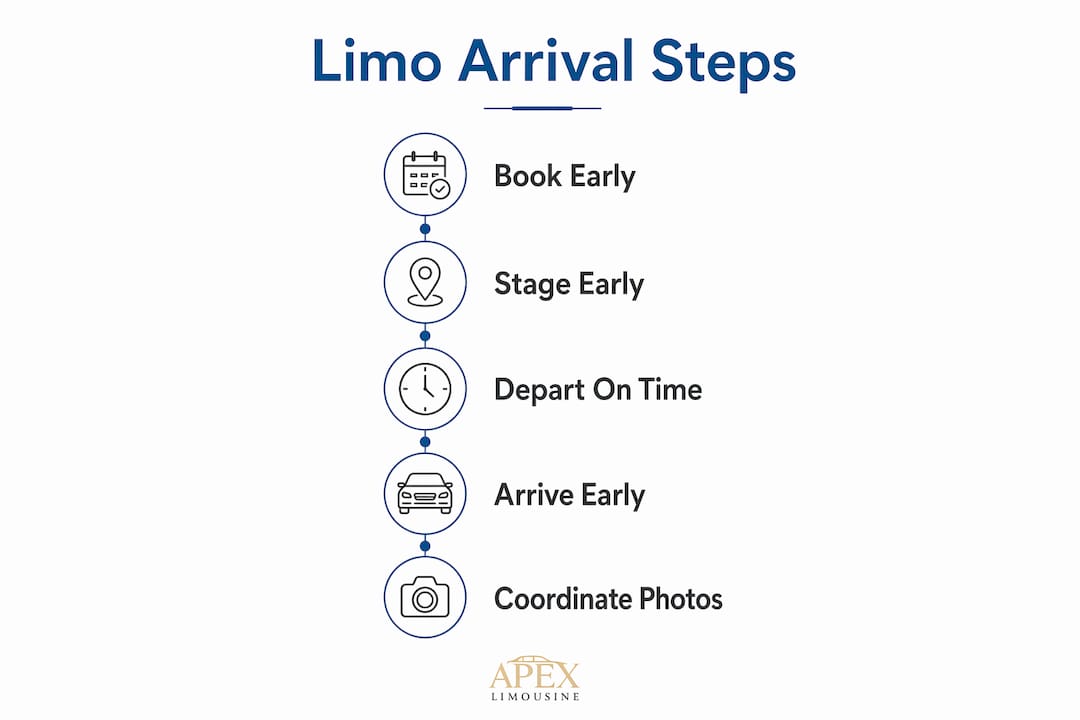
Planning the bride and groom limo arrival means scheduling precise vehicle timing and coordinating logistics so your entrance is polished, calm, and on time. The industry standard calls for the limo to stage 15–30 minutes before the bridal party departs, and for the couple to reach the ceremony venue 30–45 minutes early for final preparations and photos. Get these two windows right, and the rest of your wedding day limo timeline falls into place. Miss them, and you spend your ceremony morning chasing the clock instead of enjoying the moment.
How to schedule limo arrival timing for a perfect bridal entrance
The wedding limo schedule starts with one non-negotiable rule: build backward from fixed times. Your ceremony start time is immovable. Your photo window is immovable. Every pickup, departure, and staging time flows back from those anchors.
Here is what that looks like in practice. Say your ceremony begins at 4:00 PM. You need to arrive at the venue by 3:15 PM at the latest. That means leaving your prep location by 2:45 PM at the latest, accounting for travel. Your limo should be staged and ready at your door by 2:15 PM. That 30-minute cushion is not padding. It is your protection against a last-minute zipper issue, a missing boutonniere, or a traffic backup on the highway.

The single biggest mistake couples make is planning timing based solely on GPS travel estimates. GPS does not account for loading a cathedral-length gown, helping a grandmother into the vehicle, or the emotional slowdown that happens when everyone stops for one more photo. Wedding-day travel needs a 20–25% buffer added to every leg. That means a 20-minute GPS route should be scheduled as 25 minutes minimum.
Key timing checkpoints to build into your wedding transport planning:
- Limo staged at pickup location: 15–30 minutes before departure
- Bridal party loaded and ready to leave: 10 minutes before scheduled departure
- Couple arrives at ceremony venue: 30–45 minutes before ceremony start
- Limo available for post-ceremony transfer: staged 15 minutes before ceremony ends
- Reception arrival window: 20–30 minutes before grand entrance
For multi-venue days with photo stops, add a dedicated 45–60 minute window between ceremony and reception. Couples who skip this buffer consistently report feeling rushed during portraits.
Pro Tip: Book your wedding limo at least 3–6 months in advance during peak season, which runs from april through october on Saturdays. Popular vehicle types fill faster than couples expect, and waiting until two months out often means settling for your second choice.
What vehicle type works best for bride and groom arrivals?
Vehicle choice shapes both the logistics and the look of your arrival. Function must often take priority over appearance, because a vehicle that cannot navigate your venue's driveway or fit your gown comfortably will create problems no amount of elegance can fix.
The main options each serve different needs:
Classic stretch limousine delivers the iconic look most couples picture. It works well for flat, accessible venues with wide driveways. The interior length gives the bride room to manage a full gown without crushing the train. The tradeoff is maneuverability. Narrow historic venues, cobblestone paths, and tight parking areas can make a stretch limo impractical.
Executive SUV offers a cleaner, more modern profile. It handles varied terrain, fits into tighter venue access points, and still photographs beautifully. Couples with smaller bridal parties often prefer this option for its flexibility.
Sprinter van is the right call when you are transporting a larger bridal party together. It keeps everyone in one vehicle, simplifies logistics, and eliminates the coordination headache of multiple cars. The interior is spacious enough for gowns, suits, and touch-up kits.
Party bus works for couples who want the bridal party experience to start during transit. It fits larger groups and creates a celebratory atmosphere before the ceremony even begins.
When reviewing your luxury wedding vehicle options, confirm these details before signing:
- Exact make, model, and year of the vehicle
- Interior dimensions relative to your gown's train length
- Venue access restrictions (height, width, surface type)
- Passenger capacity with luggage and floral arrangements included
- Air conditioning reliability for summer weddings
Always specify the exact vehicle make and model in your contract. Verbal agreements leave room for substitutions that may not suit your bridal party size or photo aesthetic.
Step-by-step process to organize your wedding day limo timeline
A clear process removes guesswork and keeps everyone moving in the same direction. Follow these steps to build a transportation schedule that holds up on the day.
-
Lock in your fixed times first. Write down ceremony start, ceremony end, cocktail hour start, and reception grand entrance time. These do not move.
-
Work backward to set departure times. From each fixed time, subtract travel time plus your 20–25% buffer. Add 15–30 minutes for vehicle staging. Write these times into a master document.
-
Map every pickup and drop-off location. Include the full address, any access notes (gate codes, loading zones, parking restrictions), and the name of the contact person at each location.
-
Assign a transportation lead. This person holds the master schedule and manages all day-of decisions. Assigning a non-couple transportation lead shields you from coordination stress and keeps the couple focused on the experience rather than the logistics. A trusted family member, wedding planner, or senior bridesmaid works well in this role.
-
Share the full timeline with your limo company. Provide the schedule, all addresses, your transportation lead's phone number, and the photographer's contact. The chauffeur should never be guessing about the next stop.
-
Communicate "be ready" times to your bridal party. Tell everyone to be fully dressed and ready 15 minutes before the actual departure time. This buffer absorbs the inevitable stragglers without affecting your schedule.
-
Build a contingency plan. Identify what happens if the ceremony runs 20 minutes long, if a bridesmaid is late, or if traffic adds time to a key leg. Knowing the answer in advance means you make calm decisions instead of panicked ones.
-
Confirm all details 48 hours before the wedding. Call your limo company to verify vehicle, driver, timing, and pickup locations. Confirm your transportation lead has the same information.
Pro Tip: Share your full wedding transport timeline with your photographer and venue coordinator at least one week before the wedding. When all vendors operate from the same schedule, photo sessions stay on track and venue staff can prepare staging areas in advance.
What are the most common limo arrival mistakes and how do you fix them?
Most wedding transportation problems are predictable. Knowing them in advance means you can prevent them rather than manage them under pressure.
"Transportation should be a stress reducer, not a countdown clock. The couples who enjoy their wedding morning are the ones who built time into their schedule, not the ones who cut it close."
Mistiming the bridal party departure is the most frequent problem. Couples underestimate how long it takes to load everyone into a vehicle when formalwear is involved. A group of eight in gowns and suits takes at least twice as long to board as the same group in casual clothes. Build that reality into your schedule.
Booking too late leaves couples with limited vehicle choices. During peak wedding season, the most requested vehicles book out months in advance. Waiting until 6–8 weeks before your date often means accepting a substitute.
Ignoring venue access restrictions creates day-of surprises. Some historic venues prohibit large vehicles on their grounds entirely. Others have weight limits on driveways or height restrictions on covered entrances. Confirm these details with your venue before you book a vehicle.
- Confirm driveway width and surface type with your venue
- Ask whether the venue has a designated vehicle staging area
- Check whether the venue allows vehicles on the grounds during the ceremony
- Verify parking availability for the driver during the reception
Overly tight itineraries remove your ability to adapt. Every wedding runs slightly off schedule somewhere. A 5-minute ceremony delay, a longer-than-expected photo session, or a guest who needs extra time all compress your timeline. Couples who build no buffer into their schedule feel every one of those minutes.
A wedding transportation coordinator can manage these variables professionally, freeing you to focus on the day itself.
Key Takeaways
A well-executed bride and groom limo arrival requires building your schedule backward from fixed ceremony times, staging the vehicle 15–30 minutes early, and assigning a transportation lead to manage day-of decisions.
| Point | Details |
|---|---|
| Stage the limo early | Vehicle should arrive 15–30 minutes before departure to absorb delays. |
| Arrive at venue ahead of time | Couples should reach the ceremony venue 30–45 minutes before the start. |
| Build in travel buffers | Add a 20–25% buffer to every travel leg beyond GPS estimates. |
| Assign a transportation lead | A designated non-couple lead manages logistics and shields the couple from stress. |
| Book 3–6 months in advance | Peak season vehicles fill fast; early booking secures your preferred option. |
Why timing beats aesthetics every time
Couples spend months choosing the perfect vehicle and almost no time building a realistic schedule. That imbalance is where most wedding transportation problems start.
I have seen weddings where the vehicle was stunning and the timing was a disaster. The couple arrived at the ceremony with four minutes to spare, the photographer missed the arrival entirely, and the bride spent her first moments at the venue catching her breath instead of enjoying the entrance. The limo looked perfect in photos. The experience was not.
The weddings that run well share one trait: someone built the schedule backward from the ceremony time and added real buffers. Not optimistic buffers. Real ones. A 20-minute drive becomes 25 minutes on the schedule. A 10-minute loading window becomes 20 minutes. Those extra minutes feel wasteful in planning and invaluable on the day.
The transportation lead role is underused and undervalued. Most couples assign it informally or not at all, which means the bride or groom ends up fielding calls from the driver while trying to get dressed. Giving one person the master schedule and the authority to make decisions changes the entire morning.
My honest advice: choose a vehicle that fits your gown and your venue, then spend the rest of your energy on the schedule. A well-timed arrival in a practical vehicle beats a rushed arrival in a dream car every time.
— Jason
APEX LIMO handles your wedding arrival from start to finish
Planning a wedding arrival takes precision, and APEX LIMO brings that precision to every booking. Their Austin wedding limo service covers the full range of bridal party needs, from intimate two-person transfers to larger party vehicles, with chauffeurs who know Austin venues and their access requirements.

APEX LIMO works with couples to build a detailed arrival timeline, confirm staging locations, and coordinate directly with photographers and venue staff. Their fleet includes executive SUVs, stretch limousines, and Sprinter options suited to every venue type. Every vehicle arrives early, every driver holds the schedule, and every couple arrives calm. Request a free quote and let APEX LIMO handle the logistics while you focus on the moment.
FAQ
How early should the limo arrive for a wedding?
The limo should arrive 15–30 minutes before the bridal party's planned departure time. This window absorbs last-minute delays and gives the couple time to board comfortably.
When should the bride and groom arrive at the ceremony venue?
Couples should arrive at the ceremony venue 30–45 minutes before the ceremony starts. This time allows for final preparations, touch-ups, and pre-ceremony photos.
How far in advance should you book a wedding limo?
Book wedding transportation at least 3–6 months before your date during peak season, which runs from april through october. Popular vehicles and dates fill quickly, and early booking secures your preferred choice.
What is a transportation lead and why do you need one?
A transportation lead is a designated non-couple person who holds the master schedule and manages all day-of logistics. Assigning this role keeps the bride and groom free from coordination calls and decisions during the wedding morning.
What should be in a wedding limo contract?
The contract should specify the exact vehicle make, model, and year, along with all pickup and drop-off addresses, staging times, and the driver's contact information. Verbal agreements leave room for substitutions that may not fit your needs.