

A wedding transportation contract is a legally binding agreement that defines the vehicle, service terms, payment obligations, and liability conditions between a couple and their transportation provider. Most couples treat it as a formality. It is not. The contract is the only document that protects you if the wrong car shows up, the driver is late, or a cancellation dispute turns ugly. Understanding how wedding transportation contracts work before you sign puts you in control of one of the most time-sensitive logistics on your wedding day.
What key elements are included in wedding transportation contracts?
A wedding transportation contract covers six core areas: vehicle details, timing, payment terms, cancellation conditions, insurance, and overtime rules. Each one carries real financial and legal weight.
Vehicle description
Vehicle names on contracts often represent a fleet category, not a specific car. A contract that says "stretch limousine" could mean any vehicle in that class. Insist on the make, model, year, and color written into the agreement. If the company uses the phrase "or similar vehicle," ask them to define exactly what that means in writing.
Timing and logistics
The contract must list every pickup and drop-off location with exact addresses, not just venue names. It should also specify the start time, end time, and the order of stops. Vague timing language like "approximately" creates room for disputes.

Payment terms and gratuity
Service charges around 22% are standard business fees and are not driver gratuity. Driver gratuity typically runs 15%–20% and is often paid separately. Couples frequently misread a service charge as a tip and then feel obligated to tip again at the event. Confirm in writing whether gratuity is included or expected on top of the service charge.
Overtime and authorization
Overtime charges require explicit contract language that names a single authorized person who can approve additional hours. Without that clause, a vendor can bill for extra time based on a verbal request from a family member or wedding planner who had no authority to approve it. Name your point person in the contract before you sign.
Insurance and licensing
Commercial liability insurance and valid DOT registration are non-negotiable requirements for any legitimate wedding transportation provider. Ask for proof of both before the deposit clears. A company that hesitates to provide these documents is a red flag.
Pro Tip: Request a copy of the vehicle's insurance certificate and DOT number, then verify the DOT number independently at the FMCSA website. This takes five minutes and confirms the company is operating legally.
How does the booking and payment process work?
Booking timelines follow a predictable pattern based on vehicle type and season. Specialty vehicles require booking 8–12 months in advance, while standard fleets can often be secured 3–6 months out. Peak wedding season runs may through october, and availability shrinks fast during those months.
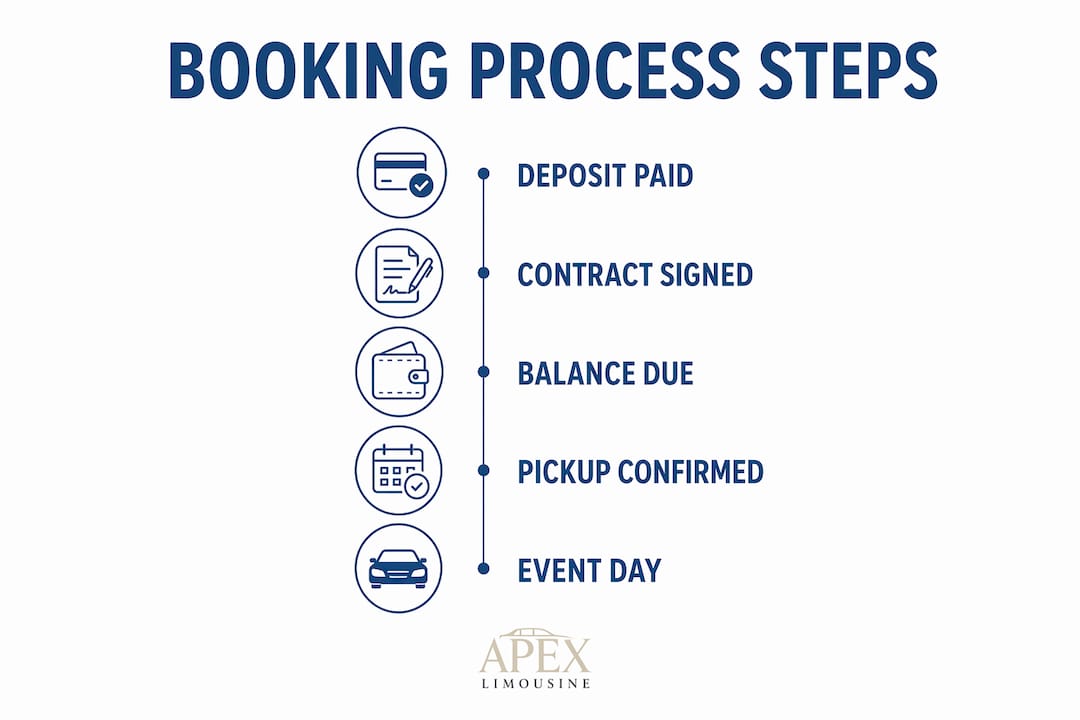
The payment process typically unfolds in three stages:
- Deposit payment. Deposits range from 30% to 35% of the total contract value and are almost always non-refundable. They become due within 48–72 hours of verbal agreement. The deposit locks in your date, your vehicle, and the company's commitment.
- Balance payment. The remaining balance is typically due 7–21 days before the event. This window varies by provider, so confirm the exact date in writing. Missing this deadline can void your contract.
- Day-of charges. Overtime, additional stops, or extended hours are billed after the event based on the contract's rate schedule. These are the charges that most often catch couples off guard.
The non-refundable deposit structure exists because the provider blocks that date for you and turns away other clients. That is a real cost to them. Understanding this helps you see the deposit not as a penalty but as a reservation fee with consequences.
Pro Tip: Set a calendar reminder 30 days before your balance due date. Late payments can trigger penalty fees or, in some contracts, automatic cancellation with no refund of your deposit.
For a full breakdown of booking timelines and planning steps, a dedicated guide covers what to do at each stage of the process.
What are common cancellation and modification policies?
Cancellation policies in wedding car rental contracts follow a sliding scale tied to how far out you cancel. The closer to the event, the more you owe.
- 60 or more days before the event. You typically forfeit only the deposit. This is the least costly exit point.
- 30–60 days before the event. Fees climb to around 50% of the total contract value. The provider has likely turned away other bookings for your date.
- Less than 30 days before the event. Most contracts charge the full contract amount. At this stage, the provider has no realistic chance of rebooking the vehicle.
- Modifications up to 14 days prior. Minor timeline changes are often allowed with no fee or a small administrative charge. Changes inside 14 days typically carry a penalty.
- Day-of changes. Adding stops, extending hours, or changing routes on the wedding day triggers overtime rates immediately. These rates are billed in increments, often 15 or 30 minutes, not full hours.
Read the cancellation clause before you sign, not after you need to use it. Negotiating a slightly longer penalty-free window at the time of signing is far easier than disputing charges after a cancellation. Some providers will agree to a 72-hour grace period after signing during which you can cancel with a full deposit refund. Ask for it.
How do you avoid surprises and negotiate your contract?
Negotiating a wedding transport agreement is not about getting a lower price. It is about removing ambiguity. Every vague term in a contract is a potential dispute.
| Contract term | What to watch for | What to request instead |
|---|---|---|
| Vehicle description | "Luxury sedan or similar" | Make, model, year, and color in writing |
| Overtime approval | No named authority | One named person authorized to approve extra hours |
| Gratuity | "Service charge included" | Explicit statement: gratuity included or not included |
| Insurance | No documentation offered | Certificate of insurance and DOT number before deposit |
| Cancellation window | Vague "reasonable notice" | Specific day counts and dollar amounts for each tier |
Building a 30-minute buffer per pickup into your rental hours is one of the most practical steps you can take. Wedding days run late. A ceremony that starts 15 minutes behind schedule pushes every subsequent pickup. Without buffer time, you pay overtime on every leg of the day.
Ask the provider directly: "What happens if the vehicle breaks down on the day?" A reputable company will have a backup vehicle policy. Get that policy in writing. If they cannot provide one, that tells you something important about how they operate.
Pro Tip: Compare at least two contract offers side by side before signing. Look at the transport package differences in cancellation terms and overtime rates, not just the base price. The cheapest quote often has the most punishing cancellation policy.
For couples selecting between vehicle types, a guide to luxury wedding vehicle options explains what each category includes and what to expect in a contract for each.
Key Takeaways
A wedding transportation contract protects you only when every term is specific, verified, and agreed to in writing before the deposit clears.
| Point | Details |
|---|---|
| Deposits are non-refundable | Deposits of 30%–35% lock in your date and are almost never returned after cancellation. |
| Verify the exact vehicle | Insist on make, model, and year in writing to avoid a substitution on the wedding day. |
| Name an overtime authority | One person must be named in the contract to approve extra hours and prevent unauthorized charges. |
| Confirm gratuity in writing | Service charges are not tips; confirm whether driver gratuity is included or billed separately. |
| Build in buffer time | Add 30 minutes per pickup to your rental window to absorb delays without triggering overtime. |
What I have learned from years of watching couples sign these contracts
The most expensive mistake I see couples make is treating the contract review as a box to check. They skim it, sign it, and move on. Then the wedding day arrives and the vehicle is a different color, the driver charges overtime because a family member asked for an extra stop, and the couple has no written record to dispute it.
The second most common mistake is assuming the service charge covers the tip. A service charge around 22% goes to the company, not the driver. Couples who skip the tip because they think it was included end up in an awkward moment at the end of the night.
What actually works is treating the contract like a risk management document. Read every clause with one question in mind: "What happens if this goes wrong?" If the contract does not answer that question clearly, ask the provider to add language that does. Most reputable providers will accommodate reasonable requests. The ones who push back on basic transparency are the ones you should walk away from.
Peak season in Austin runs may through october. If your wedding falls in that window, book early and lock in your vehicle description before the provider's availability shrinks. A company that cannot confirm your specific vehicle at booking time is a company that may substitute at the last minute.
— Jason
Reliable wedding transportation in Austin starts with APEX LIMO
Couples who understand their contracts know exactly what questions to ask before booking. APEX LIMO makes that process straightforward with fully insured vehicles, professional chauffeurs, and transparent service terms from the first conversation.

APEX LIMO's executive chauffeur service in Austin covers weddings with a fleet that includes luxury SUVs and premium sedans, each maintained to a high standard. Every booking comes with clear documentation of vehicle details, payment terms, and cancellation conditions. Couples can request a free quote online and review service terms before committing to anything. If you want transportation that shows up on time, in the right vehicle, with a driver who knows what the day requires, APEX LIMO is the place to start.
FAQ
What does a wedding transportation contract include?
A wedding transportation contract includes the vehicle description, pickup and drop-off times and locations, deposit and payment terms, cancellation policy, overtime rules, and insurance documentation. Every term should be specific and written, not verbal.
How much is a typical deposit for wedding transportation?
Deposits typically range from 30% to 35% of the total contract value and are almost always non-refundable. They are due within 48–72 hours of verbal agreement.
Can you negotiate a wedding transportation contract?
Yes. Couples can negotiate vehicle specifics, cancellation windows, overtime authorization language, and gratuity terms before signing. Providers are generally open to adding clarity, though they rarely reduce the deposit amount.
What happens if the transportation company cancels?
Most contracts include a provider cancellation clause that requires a full refund and, in some cases, a penalty payment to the couple. Confirm this clause exists before signing and ask what backup arrangements the company provides.
Is gratuity included in wedding transportation pricing?
Gratuity is typically not included in the base price or service charge. Driver tips of 15%–20% are usually expected separately. Confirm in writing whether gratuity is included to avoid confusion on the wedding day.