

The right wedding day vehicle is defined by four factors: passenger count, venue access, wedding style, and booking timing. Get all four right, and your transportation becomes part of the celebration. Miss one, and it becomes a source of stress. This guide covers every decision you need to make, from picking the vehicle type that fits your theme to locking in your booking before peak season prices climb. Whether you want a stretch limousine, a vintage classic, or a luxury sedan, the choices you make now shape how smoothly your wedding day runs.
How do you choose your wedding day vehicle?
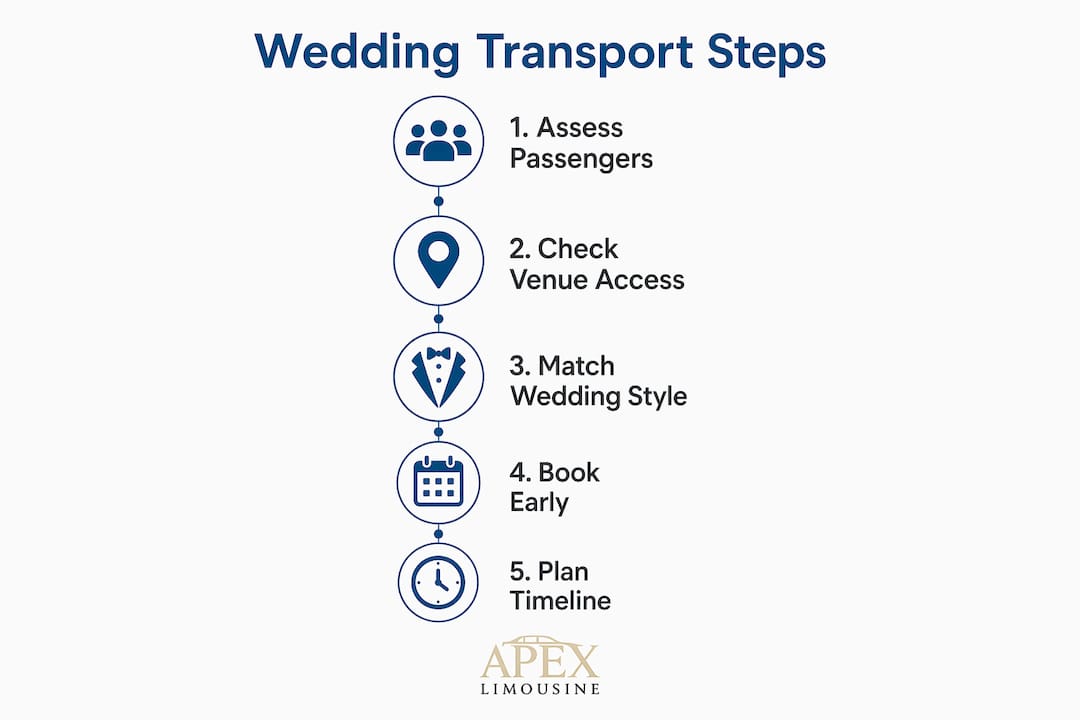
The best wedding transport decision starts with three questions: How many people need a ride? What does your venue allow? What style fits your wedding?
Passenger count is the most overlooked starting point. The bridal party, immediate family, and the couple each have different transport needs. Guest transportation works best when managed separately from couple transport, with shuttles and buses handling group logistics while luxury cars focus on the couple's comfort and schedule. Mixing both groups into one vehicle often creates timing conflicts.

Venue access shapes your options more than most couples expect. Venue physical constraints like tight driveways, low archways, or limited parking can prevent stretch limousines and vintage cars from reaching the entrance. Always confirm vehicle dimensions with your venue coordinator before signing any transport contract.
Wedding style ties the vehicle to your overall aesthetic. A garden ceremony calls for something different than a downtown ballroom reception. Your vehicle should feel like a natural extension of your decor, not an afterthought.
Pro Tip: Visit your venue in person and photograph the driveway, entrance, and parking area. Share those photos with your transport provider before booking.
Budget shapes every decision. Luxury sedans typically run $350–$600, vintage cars $400–$900, SUVs $450–$800, and limousines $800–$1,500 for standard hire blocks. Knowing your ceiling before you browse vehicle types saves time and prevents disappointment.
What are the most popular wedding transportation options?
Each vehicle type serves a different purpose. Choosing the wrong one for your situation is a common and avoidable mistake.
Luxury sedans work best for intimate weddings or when the couple wants a quiet, private ride between venues. They are easy to park, access most venues without issue, and project understated elegance. The tradeoff is limited passenger space, typically two to three people comfortably.
Stretch limousines are the classic choice for couples who want space, presence, and a party atmosphere. A standard stretch seats eight to twelve passengers, making it practical for the full bridal party. The luxury wedding cars category includes both traditional stretch limos and SUV limos, which offer more headroom and a modern look.
Vintage and classic cars deliver the strongest visual impact for wedding photos. A 1960s Rolls-Royce or a restored Bentley creates images that look timeless. The practical downside is that older vehicles have less climate control, smaller interiors, and stricter venue access requirements due to their length and turning radius.
SUVs offer a middle ground. They seat four to six passengers, handle most venues without issue, and provide air conditioning and comfort without the formality of a limousine. They work particularly well for outdoor or rustic weddings where a stretch limo would look out of place.
Party buses and shuttles solve the guest logistics problem. When your venue is more than a mile from the hotel block, a shuttle removes the parking and navigation burden from your guests entirely. Shuttle services for groups follow a different operational model than couple transport, prioritizing efficiency and headcount over comfort details.
Specialty vehicles like horse-drawn carriages or classic trolleys add a theatrical element. They photograph beautifully but require significant advance planning, specific venue permissions, and realistic expectations about travel speed and distance.
Pro Tip: Book your couple's vehicle and guest shuttle separately. They serve different functions, and bundling them into one contract often creates scheduling conflicts.
How do you plan your wedding transportation timeline?
A transportation timeline is not just about pickup times. It accounts for traffic, photo sessions, venue transitions, and the unpredictable pace of a wedding day.
Book wedding transportation 6–9 months in advance, especially if your wedding falls between may and october. Peak season demand drives last-minute premiums of 20–30%, and the best vehicles book out first. Waiting until three months out often means settling for your second or third choice.
Once booked, build your day-of timeline using these steps:
- Map every transfer. List each vehicle movement: getting ready location to ceremony, ceremony to photo locations, photo locations to reception, and reception to hotel or after-party.
- Add buffer time at every stop. Failing to build buffer time into your schedule is the most common cause of day-of delays. Add 15–20 minutes to every transfer, not just the longest ones.
- Coordinate with your photographer. Photographer involvement in transport timing reduces delays and improves the quality of vehicle photo opportunities. Share your transport schedule with them at least two weeks before the wedding.
- Confirm your minimum hire period. Most providers set a minimum hire of two to four hours. Booking the minimum hire period initially gives you flexibility to extend closer to the date as your schedule firms up.
- Review your contract for gratuity. The standard chauffeur tip is 15%–20% of the pre-tax rental. Some contracts include it automatically. Confirm this before your wedding day to avoid awkward surprises at drop-off.
Experienced wedding planners treat the transport timeline as the skeleton of the entire wedding day schedule. Every other vendor, from the florist to the photographer, works around when the couple arrives and departs. A vehicle that runs late does not just delay the couple. It delays everything.
Pro Tip: Share your finalized transport schedule with your wedding planner, photographer, and venue coordinator at least one week before the wedding. Alignment across all vendors prevents cascading delays.
What mistakes should you avoid with wedding transportation?
The most expensive wedding transport mistakes are not about vehicle choice. They are about planning failures that show up on the day itself.
- Booking too late. Waiting until four to six months before a peak-season wedding limits your vehicle options and increases cost. The best providers fill their calendars early.
- Ignoring venue restrictions. A stretch limousine that cannot fit through the venue gate is useless. Venue access constraints are a real and common problem. Confirm clearance dimensions before you commit.
- Skipping guest transport planning. Couples often focus entirely on their own vehicle and forget that guests need to get from the ceremony to the reception. Stranded guests create chaos and complaints.
- Overlooking contract details. Minimum hire times, overtime rates, fuel surcharges, and gratuity policies all affect your final bill. Read every line of your transport contract before signing.
- Underestimating traffic. Saturday afternoon traffic in any major city can add 20–40 minutes to a route that looks simple on a map. Build that reality into your schedule.
- Misaligning transport and photography. Your vehicle is also a prop. If the car leaves before your photographer gets the shots they need, you lose those images permanently.
The single most common mistake across all of these is underestimating buffer times. It causes delays, stress, and a ripple effect that touches every other part of your wedding day.
Key Takeaways
Choosing the right wedding vehicle requires matching style, logistics, and timing to your specific wedding day needs.
| Point | Details |
|---|---|
| Book 6–9 months early | Peak season demand raises prices 20–30% for late bookings. |
| Verify venue access first | Tight driveways and low arches can block stretch limos and vintage cars. |
| Separate couple and guest transport | Luxury vehicles serve the couple; shuttles handle guest group logistics. |
| Build buffer time into every transfer | Add 15–20 minutes per stop to absorb traffic and photo session overruns. |
| Read the contract before signing | Confirm gratuity, overtime rates, and minimum hire terms to avoid surprise charges. |
What I've learned from watching couples get this wrong
Couples spend months choosing flowers and almost no time on transportation. Then the car shows up and it does not fit through the venue gate, or the driver has no idea where the photo location is, or the timeline falls apart because no one built in buffer time.
The practical fix is simple: treat your transport provider as a vendor who needs the same briefing as your photographer. Share your full day schedule, your venue layout, and your photo location list. A good chauffeur who knows the plan can solve problems before they become crises.
The other thing I have seen repeatedly is couples choosing a vehicle for its looks without checking whether it actually fits their wedding. A 1950s vintage car is stunning in photos. It is also slow, warm in summer, and physically small. If your bride is wearing a full cathedral-length gown, that car may not work at all. Style and practicality have to coexist.
My honest recommendation: hire a professional chauffeur who has done weddings before, not just someone who owns a nice car. Experience with wedding-day timing, venue navigation, and couple management is worth more than the vehicle itself.
— Jason
APEX LIMO's wedding transportation in Austin
Couples planning a wedding in Austin have a clear advantage when they work with APEX LIMO. The fleet covers every style and size need, from executive sedans for the couple to larger vehicles for the bridal party, all maintained to a standard that shows up in the photos.

APEX LIMO chauffeurs are trained specifically for wedding-day logistics, including timeline management, venue coordination, and the kind of calm professionalism that keeps a busy day on track. Booking early secures your preferred vehicle and gives you time to customize the experience around your schedule. Reserve your date through APEX LIMO's executive chauffeur service and get your wedding transportation handled by a team that treats your day as seriously as you do.
FAQ
How far in advance should I book wedding transportation?
Book wedding transportation 6–9 months before your wedding date. Peak season demand between may and october fills the best vehicles quickly, and late bookings typically cost 20–30% more.
What is the best vehicle for a small wedding party?
A luxury sedan works best for two to three passengers, while an SUV comfortably seats four to six. Both offer venue access flexibility that stretch limousines cannot always match.
Should I tip my wedding chauffeur?
The standard tip is 15%–20% of the pre-tax rental cost. Check your contract first, as some providers include gratuity automatically.
How do I handle guest transportation separately from couple transport?
Use shuttles or party buses for guests and a dedicated luxury vehicle for the couple. Keeping these separate prevents scheduling conflicts and lets each vehicle serve its function without compromise.
What should I confirm with my venue before booking a vehicle?
Confirm driveway width, entrance height clearance, and parking availability. Stretch limousines and vintage cars are the most commonly blocked by physical venue constraints.