
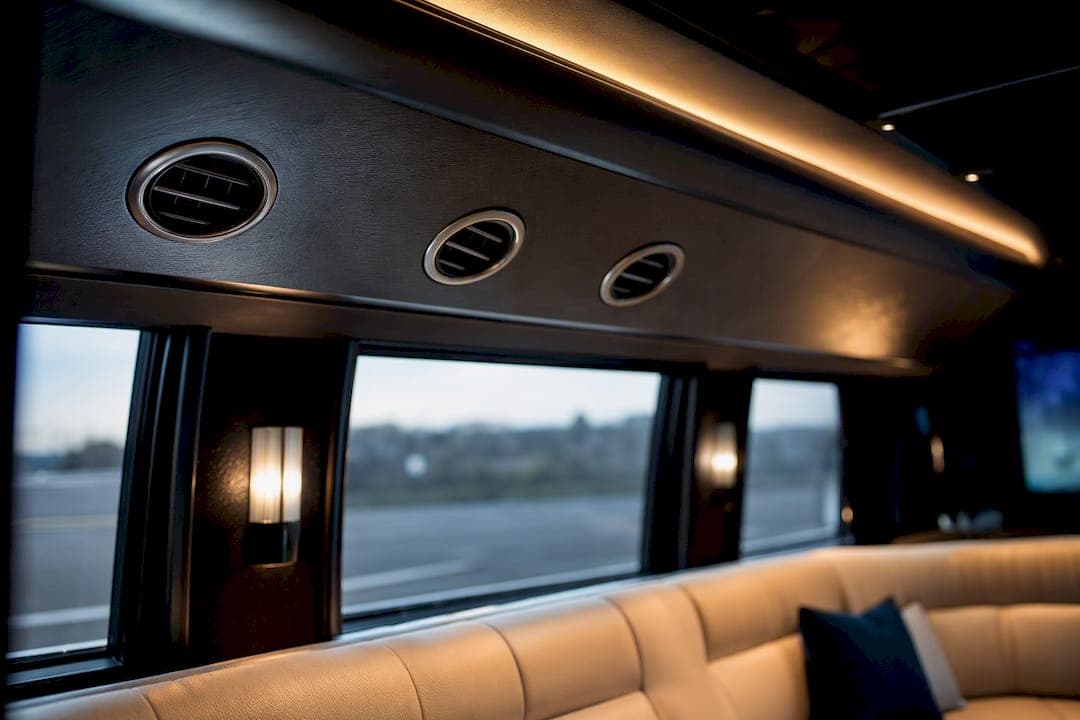
Every party bus worth booking includes programmable LED lighting, a multi-speaker sound system with a subwoofer, wraparound lounge seating, a built-in bar or cooler, and at least one flat-screen TV. That's the core bundle you can count on across most operators. What you can't count on: restrooms, exact outlet counts, and Wi-Fi vary a lot by vehicle, so confirm those specifics before you book rather than after.
TL;DR:
- Confirm the vehicle has at least one flat-screen TV, Bluetooth sound system with a subwoofer, and programmable LED lighting, but always verify exact features beforehand.
- Ask for the floor plan and specific seating count, especially if luggage, restrooms, or luggage bays reduce the maximum passenger capacity.
- Ensure the bus has a working restroom if needed, as restrooms are not standard on all vehicle sizes and often impact seating availability.
- Verify the presence and condition of outlets, USB ports, and Wi-Fi, since these amenities are optional and vary widely across vehicles.
- Book early during peak seasons and get all specifications, maintenance, and driver credentials in writing to avoid surprises on the day of your event.
Table of Contents
- Party Bus Entertainment Systems and Sound Setups Worth Checking
- How Seating Layout Changes What a Party Bus Feels Like
- Bars, Coolers and BYOB Rules You Need to Know
- Restrooms, Power, and Connectivity: What's Actually Standard
- Climate Control and Ride Comfort on Longer Trips
- Safety, Driver Credentials, and Accessibility
- Your Party Bus Booking Checklist: Questions, Costs, and Red Flags
- What Years of Fleet Experience Teaches You About Amenities
- When a Party Bus Actually Makes Sense
- Book the Right Party Bus With APEX LIMO
- Sources
- FAQ
Party Bus Entertainment Systems and Sound Setups Worth Checking
Most party buses run Bluetooth or AUX-connected sound systems with anywhere from six to a dozen speakers, plus a subwoofer in the 10 to 12 inch range for buses seating 20 or more people. Speaker placement matters more than raw count. A bus with four speakers clustered at the front will sound thin in the back row, while evenly distributed speakers keep the music consistent from the driver's seat to the last bench.
Lighting comes in tiers. Basic accent LEDs line the ceiling and floor in color-changing strips. Mid-tier buses add fiber-optic or star-ceiling effects. Higher-end units bring strobes and sound-reactive lighting that pulses with the bass. TVs usually mean one or two large screens up front for group viewing, sometimes paired with smaller screens along the sides, connecting through HDMI or screen casting.
- Ask for a photo or short video of the exact vehicle, not stock fleet images
- Request the speaker count and subwoofer size in writing
- Confirm the TV hookup type if you plan to stream music videos or a slideshow
Pro Tip: Call the operator and ask them to send a 10 second voice memo of the sound system playing. It takes them two minutes and tells you more than any spec sheet.
How Seating Layout Changes What a Party Bus Feels Like
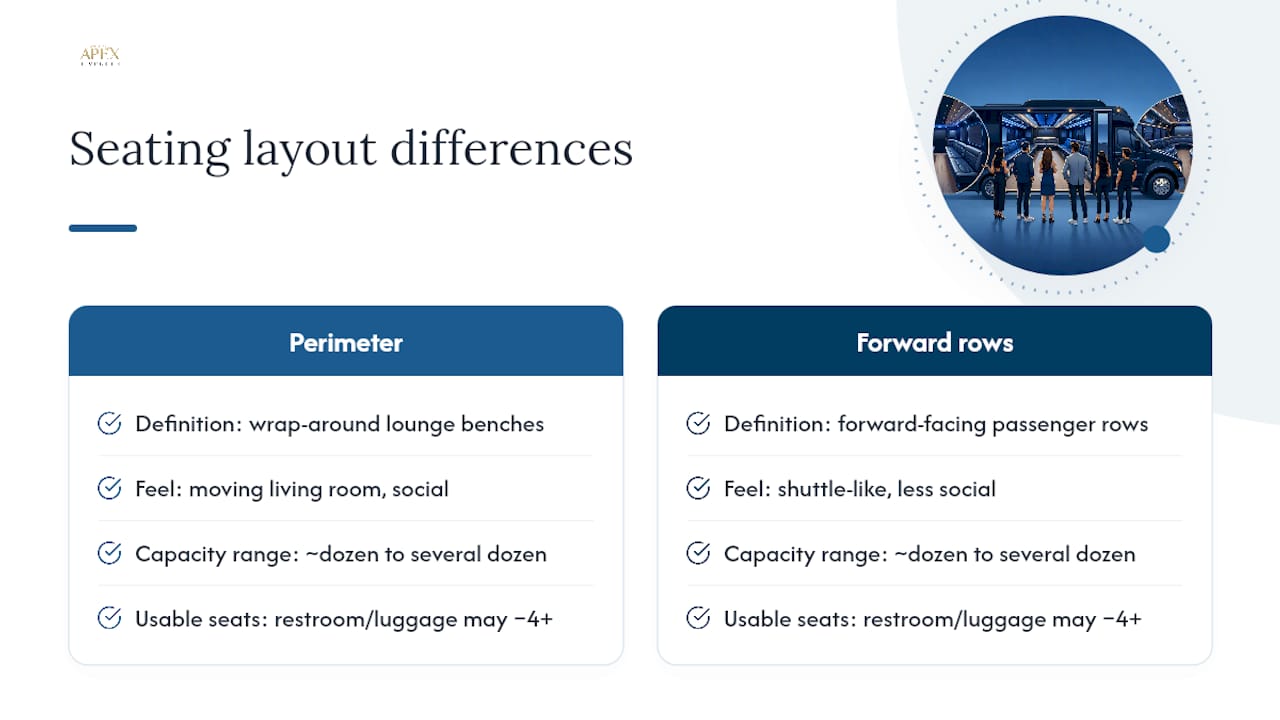
Perimeter lounge seating, benches that wrap around the walls facing inward, is what actually defines a party bus. It turns the vehicle into a moving living room where everyone can see and talk to each other, unlike forward-facing rows that feel more like a shuttle. That layout is the single biggest difference between a party bus and a standard passenger van.
Capacity ranges vary by build from smaller vans that seat around a dozen people to large coach-style buses that seat several dozen passengers.
Advertised maximums often assume everyone stays seated with no dance space, luggage, or bar traffic. A restroom or luggage bay reduces the usable seat count, sometimes by four or more seats depending on the build. Ask the operator for a floor plan or seat map for your exact unit, not a generic capacity number, and compare it against our features and capacity breakdown for Austin-specific fleet examples.
Bars, Coolers and BYOB Rules You Need to Know
A "wet bar" has a working sink and sometimes a small fridge; a "dry bar" is really just a countertop with ice bins and cup holders for drinks you bring yourself. Most party buses fall into the dry-bar category, stocked with:
- Ice bins or coolers
- Mini-fridge (on higher-end units)
- Stemware or cup racks
- Built-in cup holders at each seat
Nearly every operator runs a BYOB policy rather than serving alcohol directly, and that policy typically requires everyone drinking to be 21 or older, no glass containers on board, and sometimes an extra cleanup fee. Confirm whether the bar area will actually be stocked with ice and cups for your trip or if you need to bring everything yourself, since alcohol-related safety enforcement is one area operators can't afford to be loose about.
Restrooms, Power, and Connectivity: What's Actually Standard
Onboard restrooms are not universal. They're standard on full-size coach conversions but optional, and often skipped, on smaller and mid-size party buses. Don't assume one exists just because the listing mentions "amenities."
- USB or USB-C ports (ask for the count per seating section)
- 110V outlets for larger devices or speakers
- Wi-Fi or satellite connectivity (less common, confirm separately)
Adding a restroom or a large luggage bay eats into passenger capacity, which is exactly why two buses with the same advertised length can seat noticeably different group sizes.
Climate Control and Ride Comfort on Longer Trips
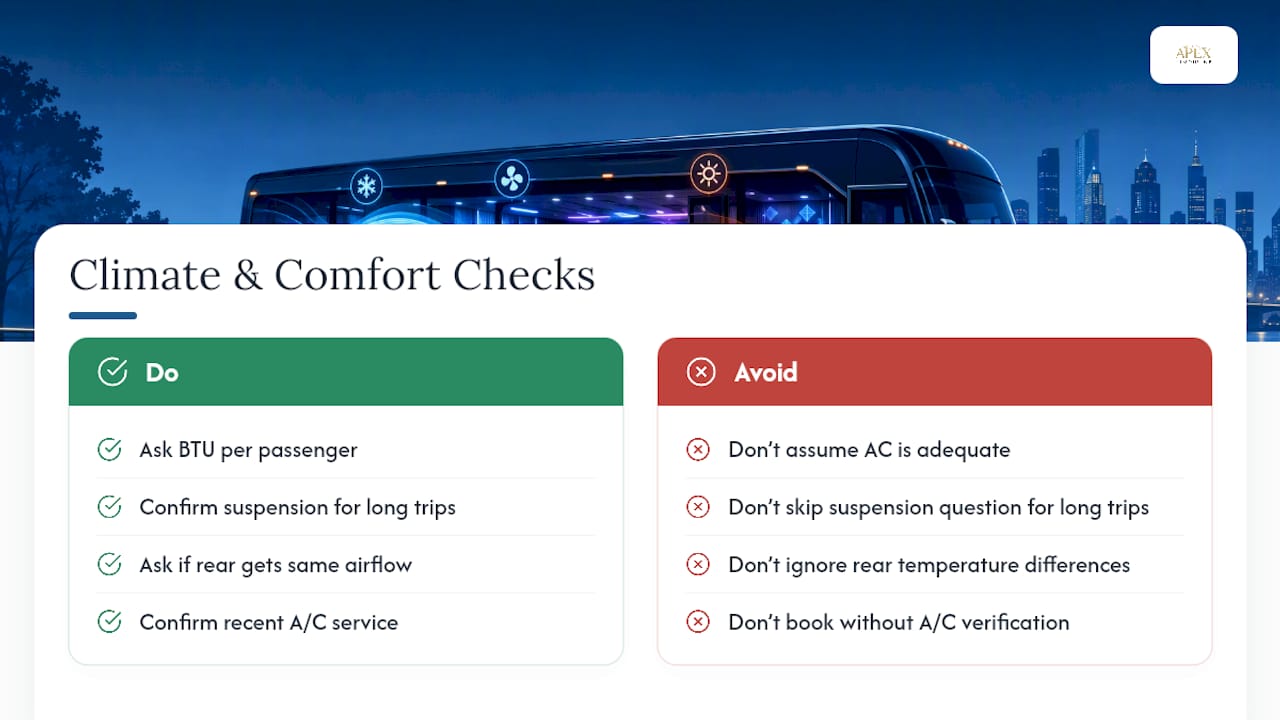
Air conditioning capacity scales with the chassis, and a bus built for 20 people needs meaningfully more cooling power than a 12-passenger sprinter. Builders publish BTU ratings that you can divide against your headcount to sanity-check whether the system will actually keep pace on a hot Texas night with the whole crew dancing.
Ride quality splits into two camps. Air-ride suspension smooths out highway expansion joints and potholes noticeably better than standard leaf-spring suspension, which matters most on multi-hour trips or full-day wine tour routes. For a two-stop night out it's a minor detail. For six hours on the road, it's the difference between arriving relaxed and arriving rattled.
Pro Tip: Ask specifically whether the rear of the bus gets the same airflow as the front. Many older conversions run cool up front and noticeably warmer in the back third.
Also worth a quick question: power steps for easier boarding, easy-clean flooring for spilled drinks, and confirmation the A/C had recent service, especially if you're booking during peak summer months.
Safety, Driver Credentials, and Accessibility
Confirm your driver's qualifications before the deposit, not on event day. Commercial passenger transport falls under federal licensing standards, and a reputable operator will tell you straight away what screening their chauffeurs go through.
- Verify handrails and secure, non-slip flooring are in good condition
- Ask for the actual (not advertised) max passenger count for your specific unit
- Confirm the operator's sober-driver and passenger-conduct policies in writing
Wheelchair lifts and securement points exist on some buses but aren't standard across the industry. If your group needs one, request specifics at least 48 hours before the event so the operator can confirm the right vehicle is available.
Your Party Bus Booking Checklist: Questions, Costs, and Red Flags
Work through this in order when you call an operator, and you'll avoid the surprises that ruin party bus nights.
- Confirm your headcount. Include kids if any are coming, plus the number of stops and any luggage or mobility needs.
- Ask about the restroom. Is one on board, and is it currently working?
- Clarify alcohol policy. BYOB rules, age requirements, and whether ice or cups are provided.
- Get the full pricing breakdown. Hourly rate, minimum hours, gratuity or service percentage, deposit amount, and cancellation terms.
- Ask if overtime is billed and at what rate if your event runs long.
- Request the exact vehicle's photos or floor plan, not stock fleet photography.
- Confirm A/C capacity and ask when it was last serviced.
- Test the audio and lighting over a quick call if possible.
- Count the outlets and USB ports if your group needs to charge devices.
Pro Tip: If an operator can't answer a floor plan question with specifics, that's your cue to keep calling. Vague answers about "one of our buses" almost always mean they're quoting you a fleet average, not the vehicle you'll actually board.
Watch for red flags: no photos of the actual unit, inconsistent answers about the restroom between phone calls, or reluctance to put pricing terms in writing.
What Years of Fleet Experience Teaches You About Amenities
Jason, a contributor at APEX LIMO, has spent years around Austin's event transportation scene watching which specs actually matter once the party starts. The pattern holds: marketing pages rarely list per-vehicle port counts or A/C BTU ratings, and builder spec sheets reveal the real differences that photos alone can't show.
Ask any operator for three things in writing: the unit's spec sheet, recent maintenance logs, and confirmation of driver training. A company with nothing to hide will send all three without hesitation. Get those confirmations before you pay a deposit, not after, and you'll walk onto the bus you were actually promised.
When a Party Bus Actually Makes Sense
A party bus earns its cost for multi-stop nights out, prom, bachelor and bachelorette parties, and lake or boat shuttle runs where the group wants to keep the energy going between locations. For a smaller crew of ten or fewer making one stop, a sprinter van is usually the more practical call. Either way, book early. Prom season and peak weekends fill fast, sometimes months out.
— Jason
Book the Right Party Bus With APEX LIMO
APEX LIMO builds every party bus rental around the checklist above, not around a generic fleet page. You get a fully customizable experience with a highly trained chauffeur, transparent flat-rate pricing with no surge fees, and over a decade of local Austin expertise behind every booking.

When you request a quote, ask exactly what this article covered: seating layout, A/C confirmation, audio and lighting specs, restroom availability, and outlet counts. APEX LIMO's party bus fleet page lists current vehicle options, and the full fleet lineup covers everything from sedans to stretch limos if your group's needs shift. For smaller groups weighing a sprinter-style layout instead, this sprinter party van breakdown is worth a look before you decide. Ready to lock in a date? Reach out for a quote and get your vehicle's exact specs confirmed in writing before you pay a deposit.
Sources
For driver licensing standards, see the FMCSA's commercial driver guidance. For alcohol safety context, see NHTSA's resources on drunk driving. For industry fleet standards, see the American Bus Association and the National Limousine Association.
FAQ
What amenities typically come on a party bus?
Expect programmable LED lighting, Bluetooth or AUX sound systems with a subwoofer, wraparound lounge seating, a built-in bar area, and at least one flat-screen TV. Restrooms, exact outlet counts, and Wi-Fi vary by vehicle and should be confirmed with the operator directly.
How do you make a party bus ride more fun?
Bring a curated playlist ready to connect over Bluetooth, coordinate a theme with lighting colors in mind, and confirm the bar area is stocked with ice and cups so you're not scrambling once the group boards.
Can you drink alcohol on a party bus?
BYOB policies are common, but they typically require everyone drinking to be 21 or older, no glass containers, and adherence to local and state alcohol laws. Confirm the operator's specific policy in writing before the event.
What food should you bring on a party bus?
Stick to easy, low-mess options like finger foods, pre-cut snacks, and sealed drinks rather than anything that needs plates or utensils, since most buses don't have kitchen facilities and spills are hard to clean mid-route.
How much does a party bus cost?
Pricing varies by operator, vehicle size, and hours booked; check the company's website for current rates and details.