
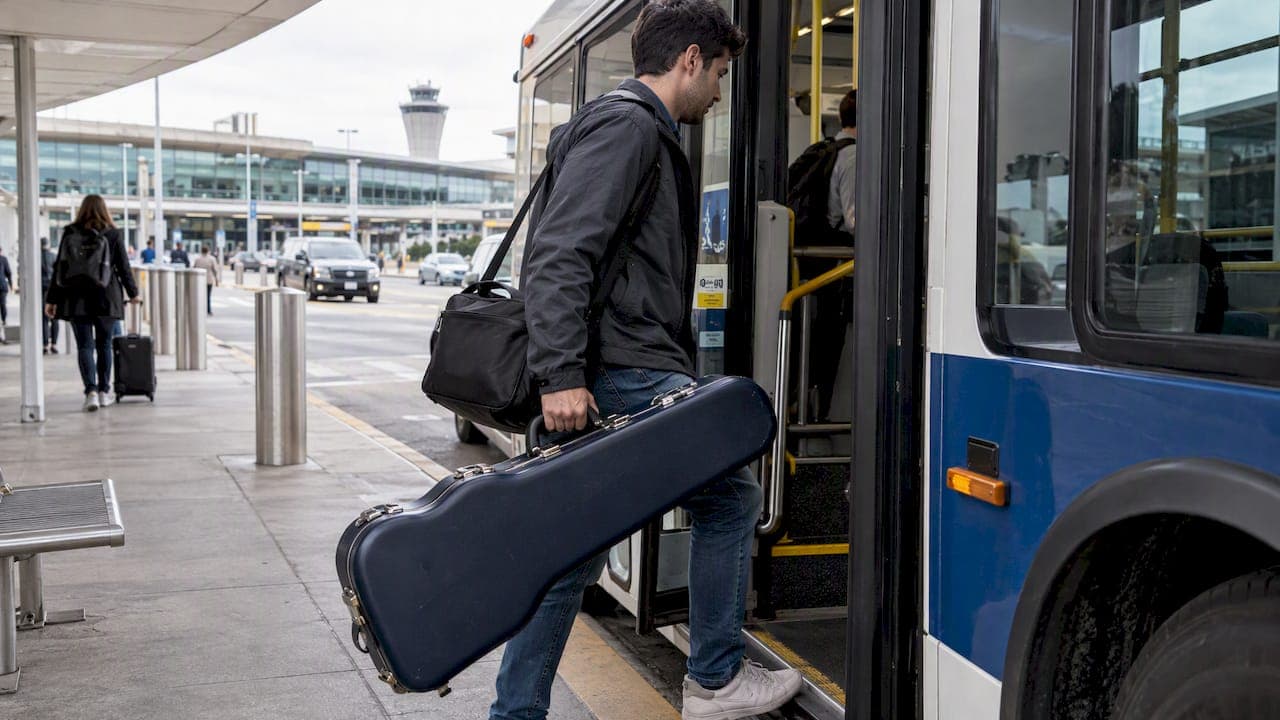
For most musicians, a private chauffeured transfer such as ours at APEX LIMO is the safest way to handle instrument transport at Austin airport. It means fewer hands on your case and a vehicle sized to fit it. Choose specialized shippers for oversized or high-value instruments, and treat the CapMetro bus as the budget fallback. Look for flight tracking and meet-and-greet before you book.
TL;DR:
- Measure and weigh each case against your airline’s cabin and checked limits; small instruments often fit in the cabin, but rules vary by carrier.
- Rideshares and taxis suit solo travelers carrying a guitar or violin that meets cabin rules, but vehicle size and loading remain uncertain.
- CapMetro Routes 20 and 483 cost $1.25 per ride; downtown takes about 35 minutes, but crowded buses are poorly suited to bulky or fragile cases.
- For oversized or exceptionally valuable instruments, arrange custom crating or professional freight rather than standard checked baggage, and get pickup and delivery details in writing.
- Send the provider case dimensions and a photo before booking, then confirm vehicle capacity, instrument handling, pickup adjustments for flight delays, and any porter help.
Table of Contents
- Which instrument-friendly transport options fit your situation?
- How do you choose the right transport for your instrument?
- What are the best packing rules for cabin versus checked baggage?
- What should you plan for at AUS pickup and dropoff?
- Who can ship or crate your instrument when a car is not enough?
- A note from Jason on booking ahead
- How do we handle instrument-friendly AUS transfers?
- FAQ
- Sources
Which instrument-friendly transport options fit your situation?
Your instrument, your group size and your budget decide the right ride. Here is how the main choices map to common scenarios:
- Private chauffeured vehicle (our service): Best for door-to-door care, a vehicle sized to your cases, meet-and-greet and flight tracking. It suits a band with several cases or anyone carrying a vintage instrument.
- Rideshare or taxi: Workable for a solo musician with a guitar or violin that rides in the cabin. You get speed and flexibility, but you cannot control the vehicle size or the loading.
- CapMetro public transit: Route 20 and Route 483 serve the airport and load at the lower level near baggage claim, according to CapMetro's airport page. It is cheap and frequent, but a crowded bus is a poor place for a fragile or bulky case.
- Specialized shippers: Needed when an instrument exceeds passenger limits or must travel in a protective crate. Freight experts advise that large or extremely high-value instruments should not travel as standard checked baggage.
How do you choose the right transport for your instrument?
Work through these steps before you book anything:
- Measure the case, weigh it, and compare both to your airline's cabin and checked limits. If it exceeds cabin rules, plan an alternative now.
- Decide by value and fragility. A high-value instrument deserves a dedicated vehicle with padded space or professional shipping.
- Match the vehicle to the load. One instrument fits a sedan or SUV, while several bulky cases call for a sprinter van.
- Book with flight tracking and buffer time, and confirm the driver knows how to handle instruments and whether porter help is needed.
- Compare cost shapes: a flat-rate private transfer, a rideshare that can surge at busy times, and shipping or crating quotes that depend on size and distance.
Pro Tip: Send your case dimensions and a photo to the provider before booking, so the vehicle and the loading plan are settled before you land.
What are the best packing rules for cabin versus checked baggage?
The safest instrument is the one that never leaves your sight. Small instruments that meet airline size rules belong in the cabin, padded and secured. Violins, ukuleles and many travel guitars often qualify, though you should confirm with your airline.
When a case has to be checked, protect it like freight:
- Use a hard flight case with extra padding around the neck and headstock.
- Loosen the strings slightly on wooden instruments so pressure and temperature swings do not stress the neck.
- Tag the case inside and out with your name, phone number and destination.
- Photograph the instrument and its serial number before you leave home.
- Confirm your insurance covers air travel and ground transport.
For very fragile or high-value items, skip checked baggage entirely. Custom crating and white-glove shipping are the preferred route, and Craters & Freighters Austin offers both. If you use a shipper, get the pickup and delivery plan in writing.
Pro Tip: Pack a small kit with a spare set of strings, a tuner and a cloth. You will want them the moment the case opens at your destination.

What should you plan for at AUS pickup and dropoff?
A little coordination saves a lot of curbside stress. For a deeper walkthrough, our guide to the AUS pickup process covers each step.
- CapMetro buses: Route 20 and Route 483 arrive at the lower level by baggage claim. A single ride costs $1.25 and the trip downtown takes about 35 minutes, per CapMetro.
- Bulky instruments: Reserve a pickup where the driver meets you at baggage claim or the curb, so you are never hauling cases through the crowd.
- Flight tracking: Confirm it with your provider so the pickup shifts with delays and the driver builds in buffer time.
- Late arrivals: Route 483 runs at night, but a prebooked private transfer gives you predictable handling when you land tired and loaded down.
Who can ship or crate your instrument when a car is not enough?
Some gear simply does not belong in a passenger vehicle. A piano, a full backline or a rare instrument needs professional packing. Two local options stand out:
- Craters & Freighters Austin: Offers custom crating, white-glove pickup and delivery, and freight coordination for oversized or high-value items. It will assess musical and concert equipment and recommend a packing method, and it handles pianos and instruments as well.
- Pak Mail Austin: Provides residential freight and packing, including pickup, on-site packing, blanket wrap and inside delivery for fragile items.
For urgent or multi-item shipments, ask about air freight or LTL freight, and request a tailored estimate with lead times.
A note from Jason on booking ahead
The rule is simple: decide before you land, not at the curb. Measure your cases, reserve a vehicle that fits them, and confirm flight tracking and meet-and-greet. Use chauffeurs and specialty shippers where your instrument demands it.
— Jason
How do we handle instrument-friendly AUS transfers?

Our drivers pick the vehicle around your gear, whether that is a sedan for one guitar or a sprinter van for a full band. You get door-to-door service, flight tracking and buffer time to help coordinate your pickup if your flight is delayed. Browse vehicle sizes on our fleet page, or read about our AUS airport transportation service. Flying in on a private aircraft? Partners like Bluebird explain how private aviation avoids baggage delays. When you are ready, request a quote with your case dimensions and your pickup and dropoff details, and we will build the plan around your instrument.
FAQ
Is there a bus that goes to Austin airport?
Yes. CapMetro runs Route 20 and the night Route 483 to AUS, arriving at the lower level near baggage claim. A single ride costs $1.25, per CapMetro.
What international destinations does Austin fly to?
Austin-Bergstrom offers nonstop service to roughly 68–81 destinations depending on the season, including around 11 international routes, according to DirectFlights. Check your airline for current routes.
What is Austin Executive Airport?
It is a general aviation facility used for private and corporate aircraft, not a commercial passenger airport. Commercial travelers, and musicians flying on airlines, use AUS instead, per Austin Executive Airport.
Can I put my instrument in checked baggage?
Small instruments are safest in the cabin. Large or very valuable ones should not go as standard checked baggage, so use a hard case or professional shipping instead.
Sources
- Airport Service – Capital Metro – Austin Public Transit
- Shipping Musical Instruments
- Crating, Shipping & Packaging Company Austin TX
- Pakmail