
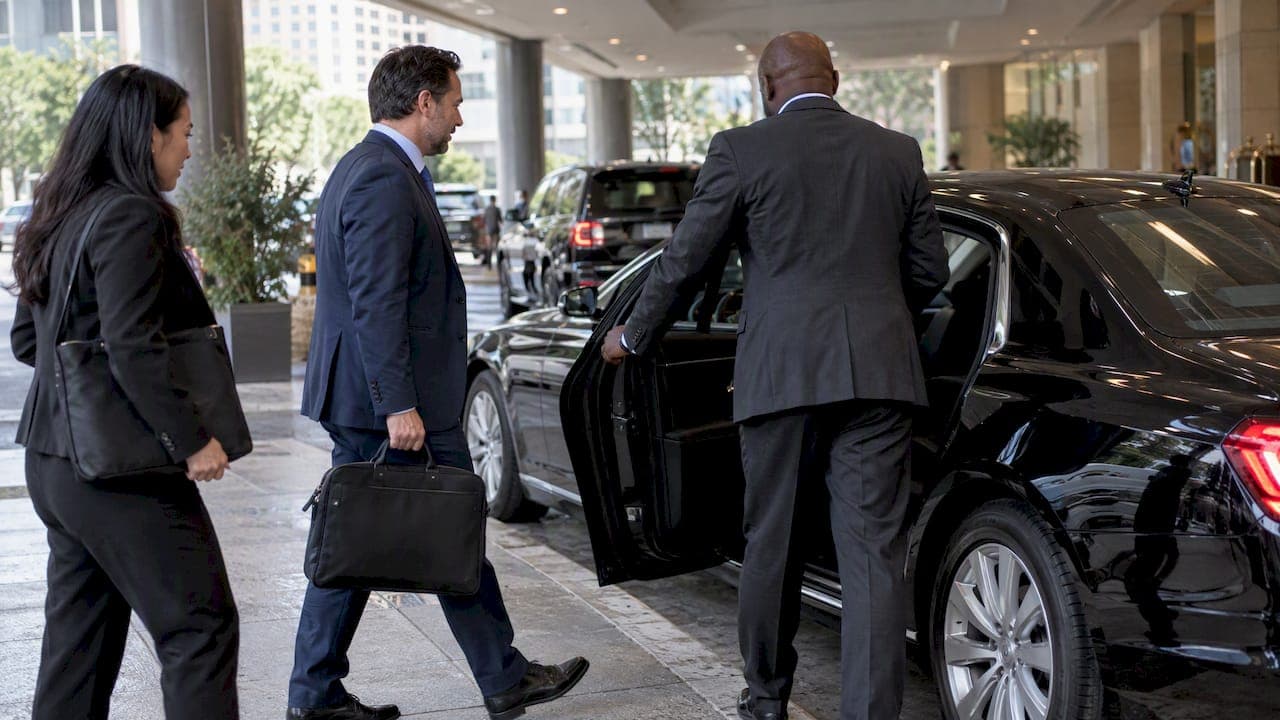
For most corporate events, centralize group transport with a single provider that offers flight tracking, staged shuttle routing, and written backup capacity. Assign one account manager so planners have one number to call. Then match each vehicle class to a job: sedans and SUVs for VIPs, vans for small teams, coaches for large transfers. That structure keeps arrivals on time and your agenda intact.
TL;DR:
- Match vehicles to needs: sedans or SUVs for VIPs, vans for small teams, coaches for large transfers, and a lift or ramp in each wave.
- Book small meetings several weeks ahead, and begin conference transport discussions as soon as the venue and dates are fixed.
- Collect flight, hotel, and group details during registration, then build buffered arrival windows and require written driver holds plus flight tracking through centralized dispatch.
- Put reserve capacity in writing with a defined response time, such as a callout within 30 minutes, and assign staff roles in the emergency plan.
- The Executive Black Sedan starts at $120 per hour, while the Executive Sprinter Van starts at $175 per hour, before wait time or staffing costs.
Table of Contents
- Why does group transportation matter for corporate events?
- Which vehicle types fit which event needs?
- How should you schedule, route, and time your bookings?
- What does event transportation cost, and how do you budget it?
- How do you design a smooth attendee experience?
- What contingency plan should event transport include?
- How do you choose a provider and structure the contract?
- Why provider-managed transport is the lower-risk choice
- How we can support your corporate event transportation
- FAQ
- Sources
Why does group transportation matter for corporate events?
Transportation is the first and last thing your attendees experience. A late shuttle at the airport sets the tone before the keynote starts, and a stalled evening return leaves the final impression. Good corporate event transportation planning protects punctuality, attendee energy, and your brand.
Event logistics research treats the movement of people and materials as a priority, and it ties contingency planning and budget governance to transport and last-mile delivery. In practice, that means:
- Reliable pickups cut no-shows and keep the opening session from starting half empty.
- One dispatcher tracking every vehicle catches schedule slippage before it spreads.
- A single provider scales across multiple venues and days without rebuilding the plan each morning.
- Professional drivers handle luggage, directions, and questions so your staff can focus on programming.
Which vehicle types fit which event needs?
Choose vehicles by job, not by habit. Check seats, luggage space, and accessibility for every class before you commit.
- Executive sedan or SUV: VIPs, speakers, and small groups. Our fleet includes both.
- Sprinter van: Small teams and leadership groups moving together with bags.
- Minibus or motorcoach: Large airport transfers and hotel-to-venue loops.
- Party bus: Brand events and off-site receptions where the ride is part of the experience.
For a typical conference day, stage the mix like this: sedans meet executives at the airport, vans move early arrivals to the hotel, a coach loop runs hotel to venue during peak windows, and a party bus handles the evening off-site. Our guide to corporate event transport types goes deeper on capacities. Confirm that at least one vehicle in each wave has a wheelchair lift or ramp.
How should you schedule, route, and time your bookings?
Lock in your provider early. For a small meeting, several weeks is usually comfortable. For a multi-day conference, start vendor conversations as soon as the venue and dates are fixed, because reserve capacity is hardest to find once your dates are public.
- Collect arrival data (flight numbers, hotel, group size) at registration, not the week before.
- Build arrival windows with buffers, so one delayed flight does not strand a full coach.
- Set a written driver hold policy for airport pickups and agree on layover rules.
- Require flight tracking and centralized dispatch from your provider.
- Hold a short coordinator briefing each morning to confirm routes, headcounts, and changes.
Pro Tip: Send attendees a single transport confirmation with pickup times, meeting points, and a dispatcher phone number. Fewer questions reach your registration desk.
For larger programs, our conference group transportation guide covers routing in more detail.
What does event transportation cost, and how do you budget it?
Providers usually price in a few ways, and each suits a different event shape:
- Hourly: Best for flexible, on-call service such as executive movement.
- Flat-route: Best for fixed airport or venue runs with predictable timing.
- Per-passenger: Useful when headcount is steady and shared rides are acceptable.
- Packaged: Bundles vehicles, a coordinator, and standby capacity into one rate.
Cost drivers include vehicle class, deadhead miles, wait time, staffing, and complexity such as multiple pickup points. As a reference point, our Executive Black Sedan starts at 120 $ per hour and our Executive Sprinter Van at 175 $ per hour, per our fleet page.
To set a per-attendee allowance, divide your total transport estimate by confirmed attendees, then add a contingency line. Packaged rates make sense when your schedule has many moving parts.

Event logistics guidance treats transport and last-mile delivery as budget items that need governance. Put transport in the budget from day one rather than discovering it later.
How do you design a smooth attendee experience?
Treat the curb as part of your venue. A clear pickup flow turns a stressful wait into a branded touchpoint.
- Use signage at every pickup and drop-off, plus marshals in event colors during peak flow.
- Keep walk paths short and weather-protected where possible.
- Confirm that accessible routes connect each drop-off to registration and event areas, and verify door operation and aisle clearance in person.
- Give VIPs a separate queue, a branded vehicle, and a named escort.
- Offer refreshments at waiting areas. A visitor refreshment vending station can keep queues comfortable without staffing a table.
Pro Tip: Include a person who uses a wheelchair or mobility aid in your site walk. Booking an "ADA-compliant" vehicle does not prove the route works.
What contingency plan should event transport include?
Contingency work lives or dies on written commitments. A reserve vehicle you cannot call is not a reserve.
- Secure a written backup capacity agreement that commits standby vehicles within a defined response time, such as a 30-minute call-out.
- Build transport into your emergency action plan. A transportation management plan should detail parking, vehicle routes, and named staff responsibilities, and it should be reviewed in the final days before the event.
- Mark ingress and egress routes and agree on standby medical transport with venue security, following crowd-management guidance on Emergency Transportation Plans.
- Run a daily pre-event briefing and share a communication tree so every driver knows who to call.
How do you choose a provider and structure the contract?
Vet providers on professionalism, reputation, and flexibility, then lock the details into the agreement:
- Written backup capacity with a response time.
- Clear flat-rate or hourly terms, including overtime.
- Cancellation and late-change terms.
- Proof of insurance and driver background checks.
- A dedicated event coordinator and flight-tracking integration.
- Real-time reporting and clear, itemized invoicing.
Ask for references from similar corporate events and read testimonials for specifics, such as vehicle condition and driver punctuality. Professional providers often offer scalable fleets, coordination teams, and centralized billing, so ask for those features by name.
Why provider-managed transport is the lower-risk choice
Planners tend to underestimate how much attention transportation steals from programming. When you manage rides yourself, every flight delay becomes your phone call and every breakdown becomes your crisis. A provider-managed program moves that accountability into a contract with a dispatcher, a standby plan, and a person whose only job is movement. The best day-of coordination is invisible: attendees simply arrive. In my view, the risky move is saving a modest amount by splitting transport across several vendors, because you then own the gaps between them. Our corporate event transportation guide shares more checklists.
— Jason
How we can support your corporate event transportation
Our team can discuss your corporate event transportation needs. We run sedans, SUVs, Sprinter vans, stretch limousines, and party buses, plus executive chauffeur and airport service, all available through our corporate car service and services pages. When you request a quote, ask about flight tracking, and we will include it in your proposal. Tell us your dates, headcount, and venues, and we will map the vehicle mix and timing with you.

Request a corporate transportation quote and let us take transport off your plate.
FAQ
How far ahead should you book event transportation?
Book as soon as your venue and dates are confirmed. Multi-day conferences need earlier conversations than small meetings, because reserve vehicles are hardest to secure close to the event.
What vehicle works best for VIP and small-group transfers?
An executive sedan or luxury SUV suits VIPs and groups of up to a few people. A Sprinter van works when a small team travels together with luggage.
What should a backup capacity clause include?
It should commit reserve vehicles within a specific response time, such as a 30-minute call-out, to cover flight delays, last-minute additions, or breakdowns. Get it in writing before you sign.
How do you budget transportation per attendee?
Divide your estimated transport total by confirmed attendees and add a contingency line. Packaged rates tend to work well when the schedule has many pickup points.
Sources
- Entertainingsafety
- A Guide for State Government, Local Authorities, Administrators and Organizers
- Event logistics
- Wearespin